
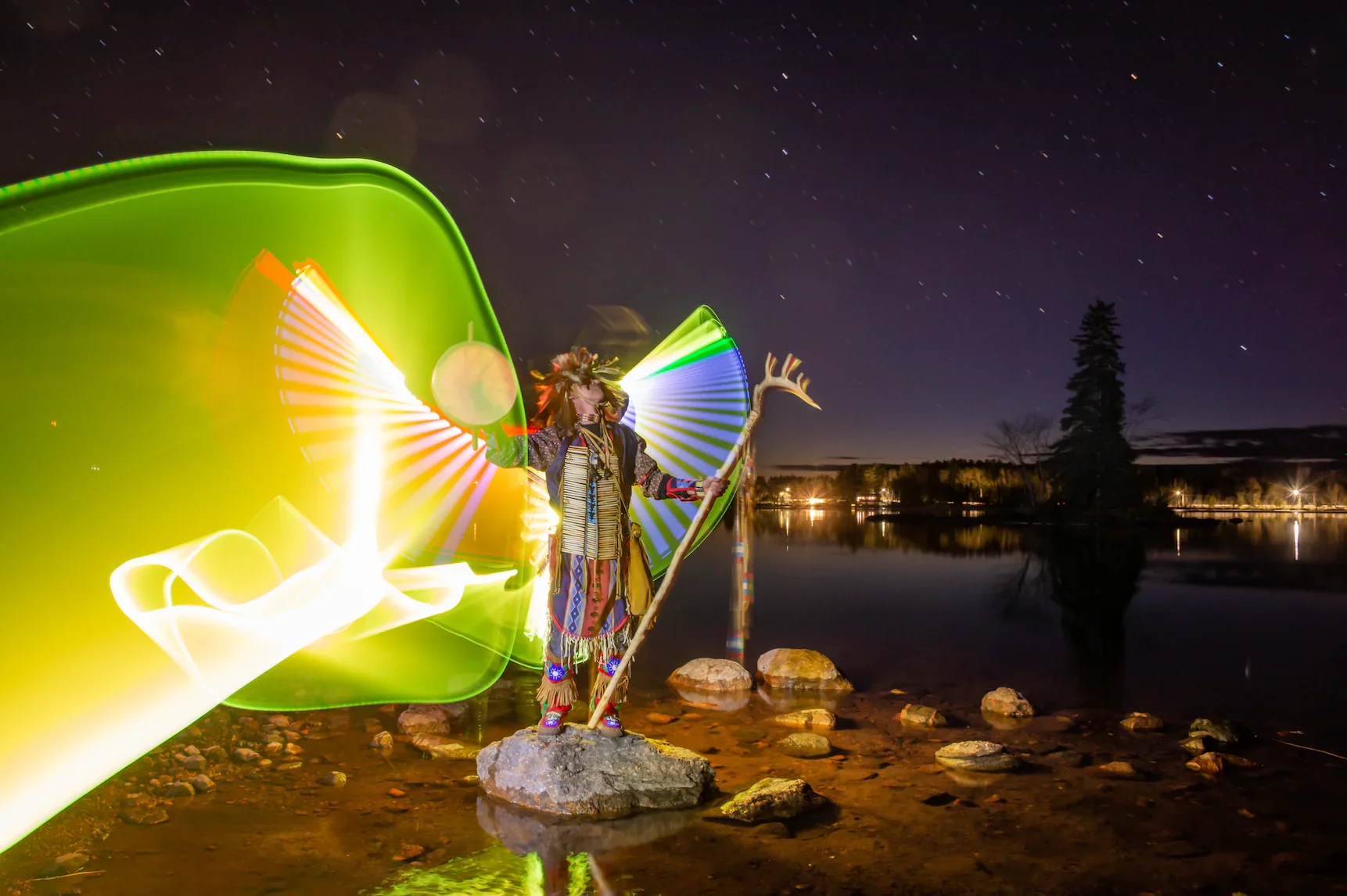
The light of PJ Leroux
Dear friends,
I’m thrilled to share a new release of fine art photographs that feel especially meaningful — a limited-edition series by the exceptional photo-based artist PJ Leroux, a member of the Algonquins of Pikwakanagan First Nation in Golden Lake, Ontario.
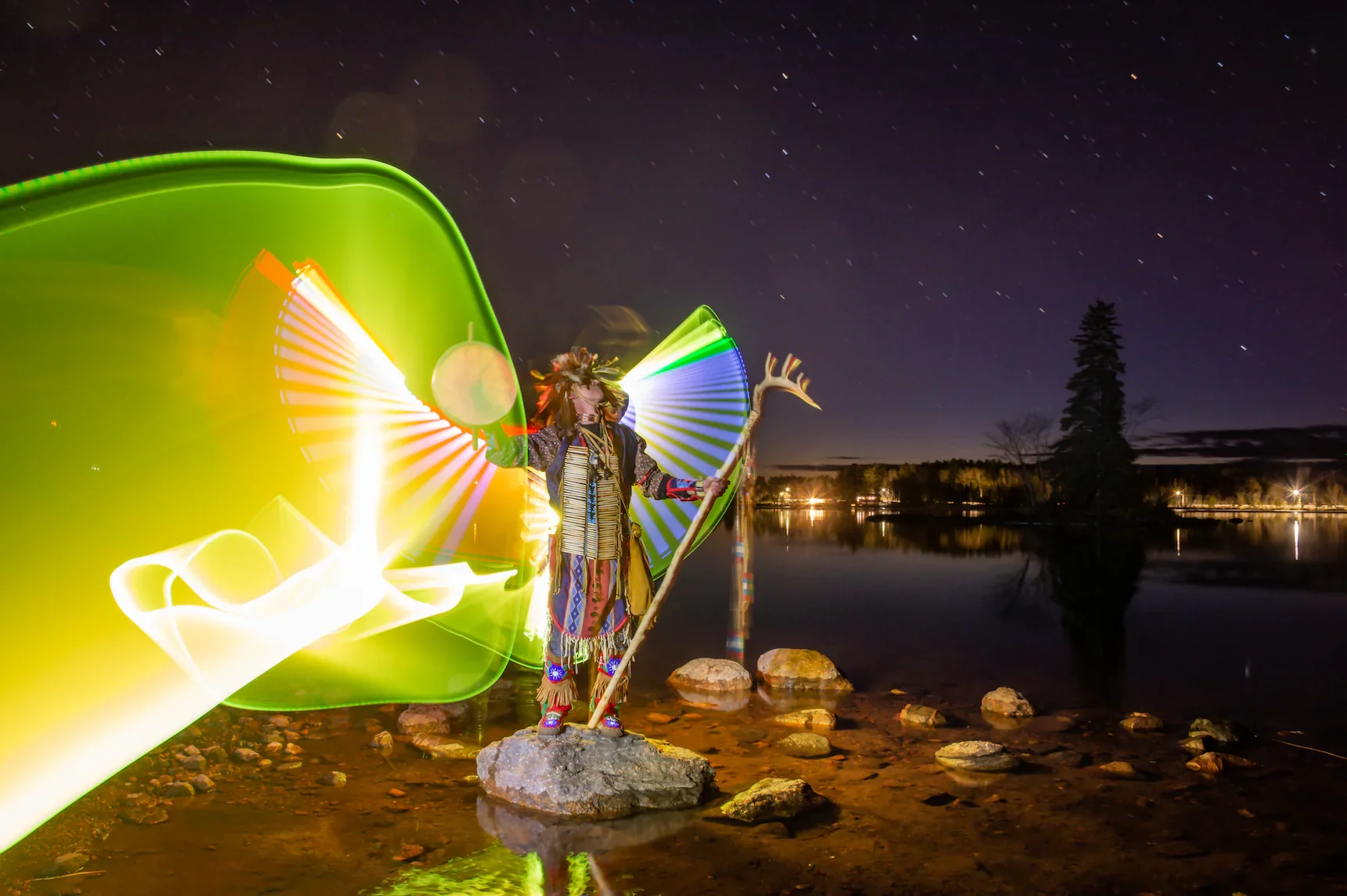
PJ Leroux, Daughter’s Footsteps, 2022
I met PJ five years ago while consulting on an extraordinary project in Ottawa for a company called Zibi. It was extraordinary not because of the aesthetics of the building (it’s gorgeous), but because of their values. I’d honestly never seen anything like it in my years as an art consultant. Their mandate — to work with the local Indigenous populations — was woven throughout every level of their work and went far beyond just the selection of art.
As part of my work with Zibi, I was invited to join an Indigenous cultural learning workshop guided by Algonquin-Anishinaabe community members. The artists I recommended for the project were then reviewed by women from the Memengweshii Council, and it was one of these women who first shared PJ’s work with me.
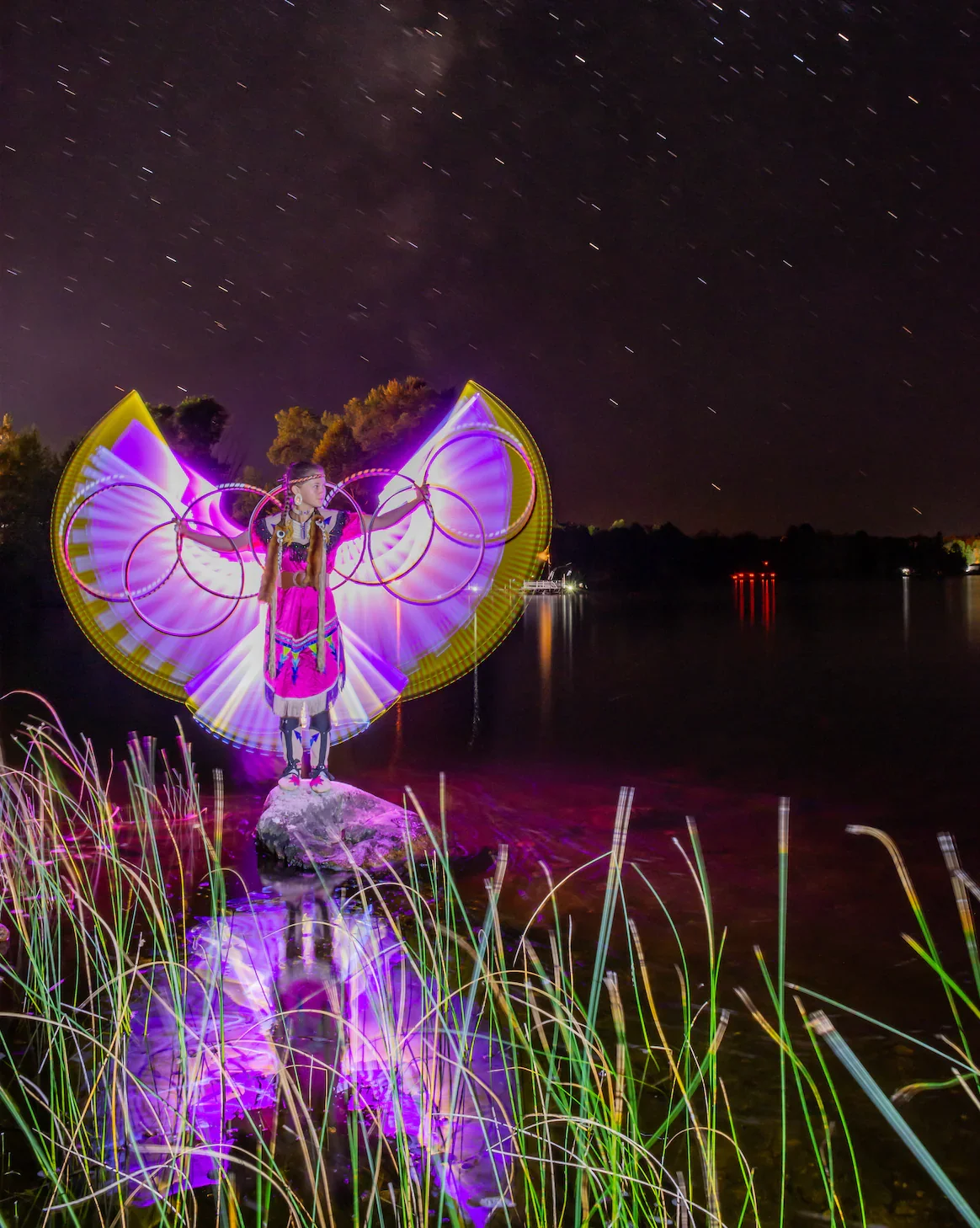
PJ Leroux, Sparrow, 2022
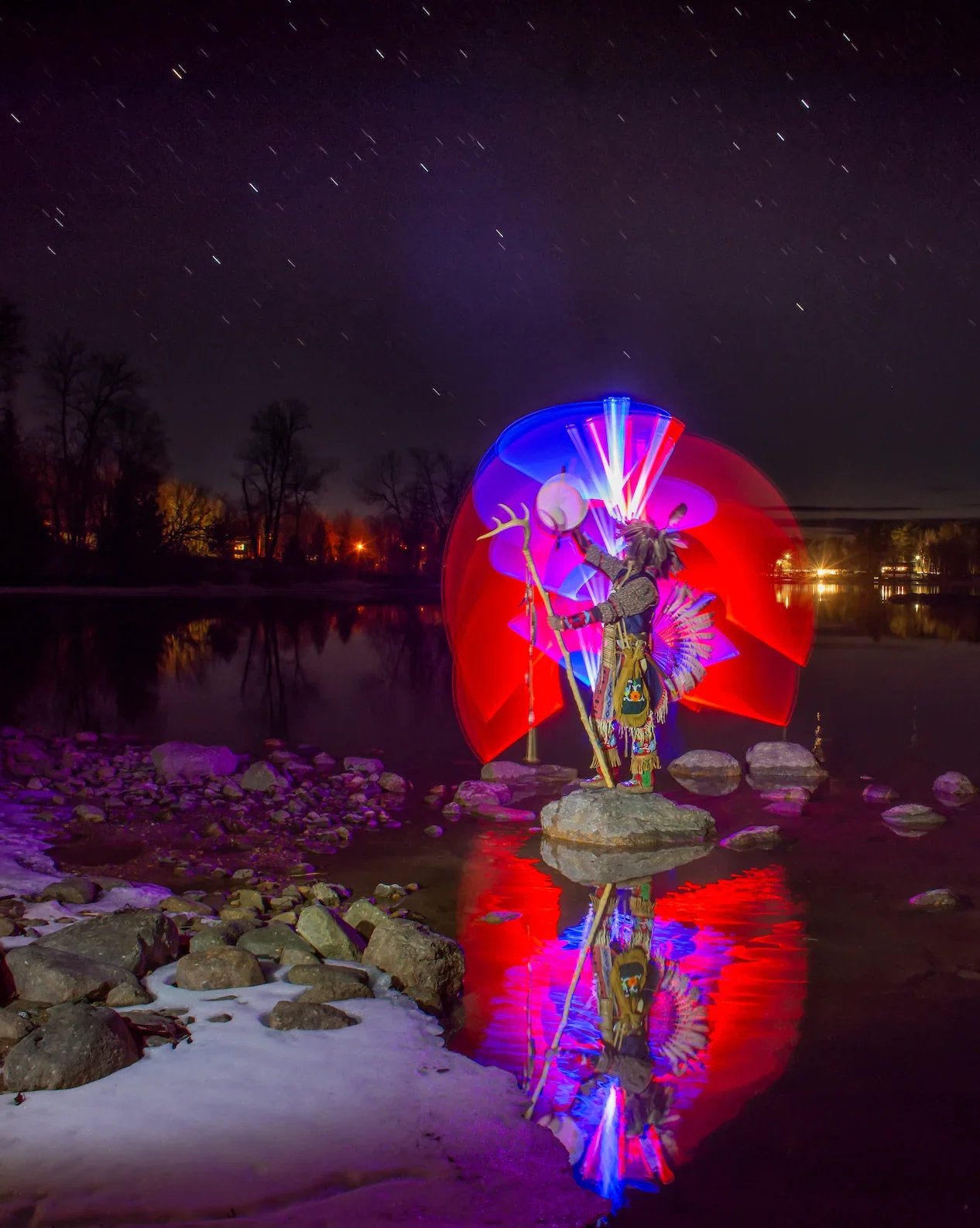
PJ Leroux, Bruce Banner, 2022
The series we’re releasing today, however, is different from what I first saw. PJ is an accomplished photographer — he shoots a stunning landscape and slows down to see the world in a way that helps us see life through his lens. But when he showed me this new body of work, I was taken aback. It was something he had been pursuing quietly alongside a journey that’s taken him through multiple paths — from truck driver, to field technician, to communications specialist to, most recently, elected Councillor in his community. The energy in these photographs was completely different: celebratory, powerful, and a far deeper expression of who PJ is and what he stands for.
This is a moment that has been a long time in the making. PJ and I have stayed connected over the years — I’ve used his work in several of my art consulting projects, and my son and I visited his family recently as they were preparing to move into their new home, just a week before his community’s annual pow wow. PJ walked me through these photographs, and all I can say is that there was a knowing in the work. “Greatness,” in the way my hero Rick Rubin describes it — as a devotional act, a gift to the Universe, rather than simply a path to achievement.
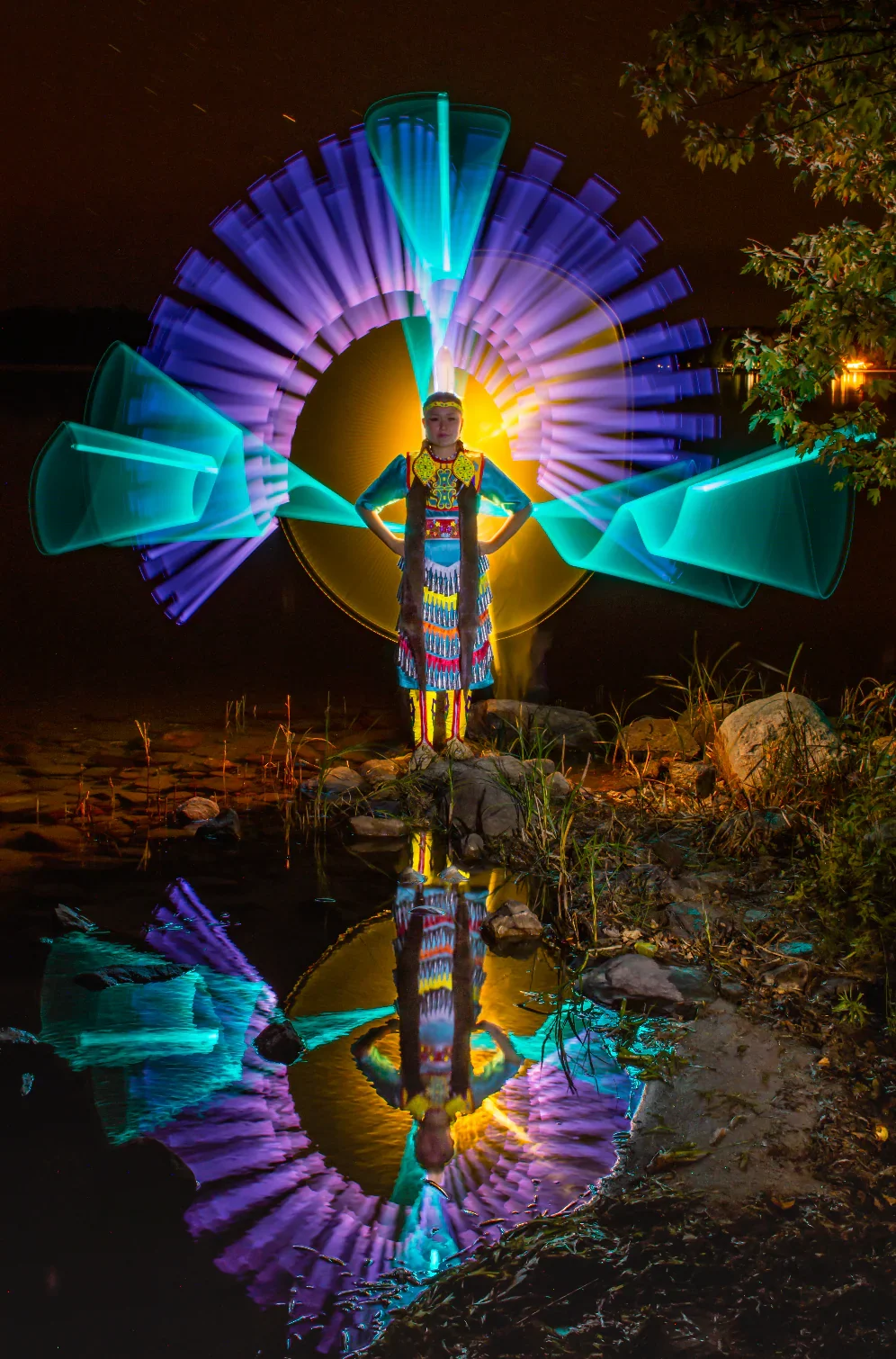
PJ Leroux, Me N Meiyah, 2022
PJ’s warmth, sincerity, and humanity come alive in this work. I could never have predicted how powerfully his practice would evolve — into this luminous, community-centred expression. His process begins with something simple: an invitation to friends — often performers, dancers, and musicians — to come together and play. They arrive wearing traditional regalia, each piece handmade by people in the Algonquins of Pikwakanagan First Nation where he lives. PJ, by the way, shares all profits from the sale of his photographs with his collaborators.
These images are created entirely in-camera using long exposure, custom-built lighting, and the natural landscapes of Golden Lake. The result is a striking fusion of performance, portraiture, light, and ceremony. These aren’t staged moments — they’re lived expressions of identity, kinship, and trust. As PJ describes it:
“Luck, patience, persistence — and friends who believe in their friends. My belief in their power, and their faith in mine.”
This release marks a new chapter in PJ’s artistic practice: an opening, a declaration, an invitation. I’m deeply honoured to share these limited-edition prints with you. Details on editions, sizing, and availability can be found below.
Thank you for taking the time to experience this work.
Emily
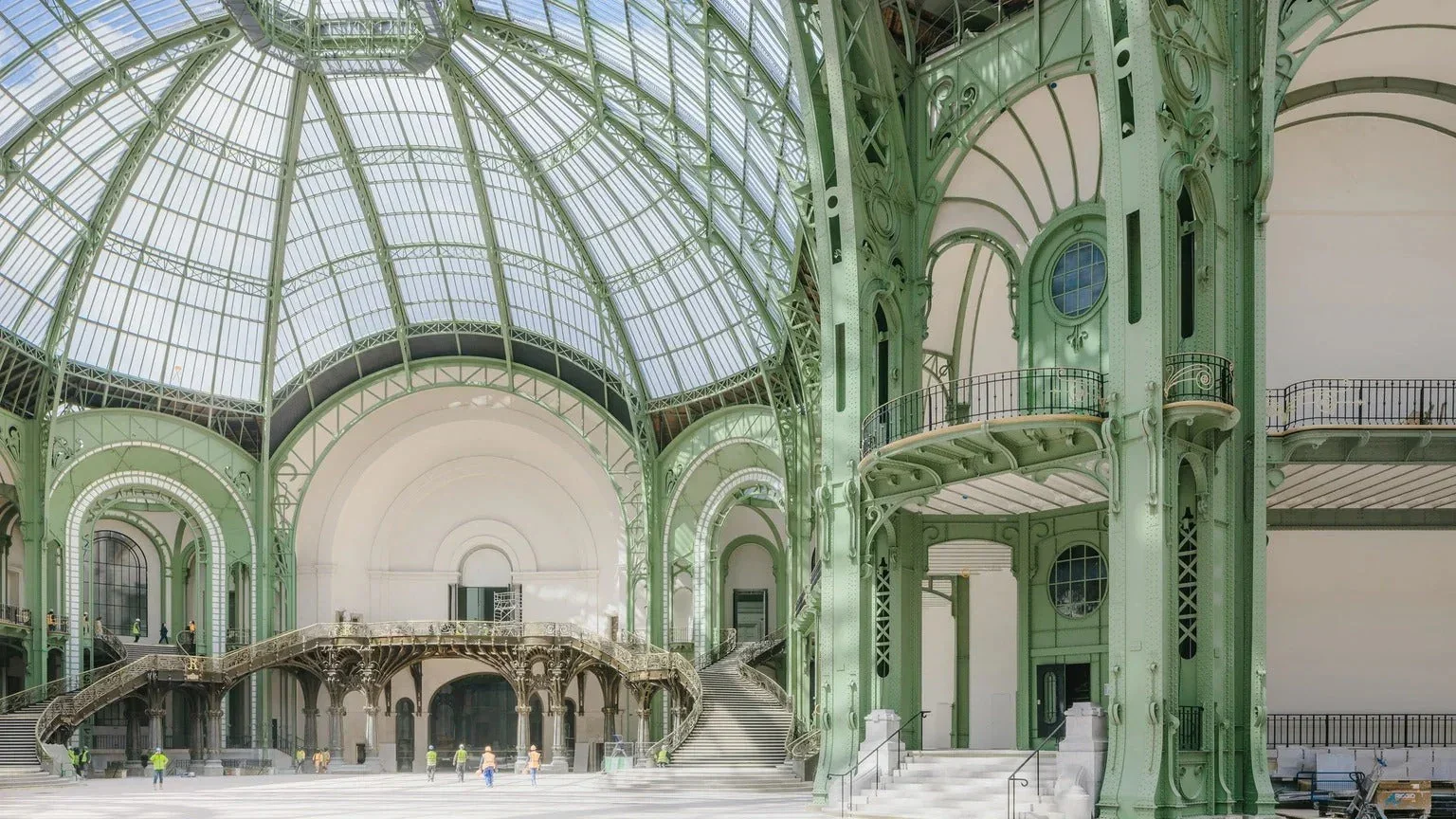
From Basel to the Bourse, a fresh art energy emerges in Paris
To start, let me say July is not the ideal time to visit Paris - nor anywhere in Europe - unless you are braced for a bit of crowdsurfing. That said, there is incredible art to be found in Paris any time of year, and peak tourist season is no exception. Read on if you are planning to be in France. Or if you prefer to just take an armchair voyage of contemporary culture alongside me - welcome aboard. Below is my list of the top 12 exhibitions, art spaces and institutions that are shaping the narrative of culture today. That may sound like hyperbole, but mark these words - Paris is having a(nother) renaissance.
As featured in The Globe and Mail.
Paris has had many chapters as a cultural leader, so this is a position the city knows well. That said, I would be remiss in not mentioning a crucial fact about culture in France, which is that of its main benefactor - the fashion industry.
Some of the best shows - and architecture - are being facilitated by the biggest names in luxury fashion; Chanel, Dior, LVMH, Cartier, Pinault, and Lafayette. Even museums, including the Musée d’Orsay, are acquiring new works due to the generosity of these large fashion houses. Art and fashion are increasingly in a mutual admiration society. Together, they are melding audiences and helping to bolster a greater awareness for art by bringing it to a much wider population than acting independently would allow (Miu Mui’s partnership with the newly established Art Basel Paris last October is a case in point).
This also allows us as viewers, due to the nature of private funding, to hear from artists in a more unfiltered way at this critical time. The artist perspective is, and always has been, of utmost importance to our understanding of the world. It is exactly this expansion of privately funded art foundations descending on the French capital therefore, that is creating this cultural renaissance in Paris in the first place. This shift is driven by several factors, including the monopoly moving away from New York and London (partly due to Brexit), the opening of Paris outposts by major commercial galleries, and the city’s relative affordability attracting international artists.
The forerunner to all of this was when the Fondation Cartier opened their private collection to the public for the first time in 1984. The Fondation Cartier played a pioneering role in promoting contemporary art in Paris, and will soon move into a new Jean Nouvel-designed headquarters across from the Louvre at 2 Place du Palais‑Royal in central Paris on October 25, 2025. Book your tickets in advance, this will surely be one of the hottest venues to land in Paris during the art fair frenzy this fall.
TOP 12 BEST SHOWS TO SEE IN PARIS NOW
(or to mark on your Paris To Do List for the future):
INSTITUTIONAL
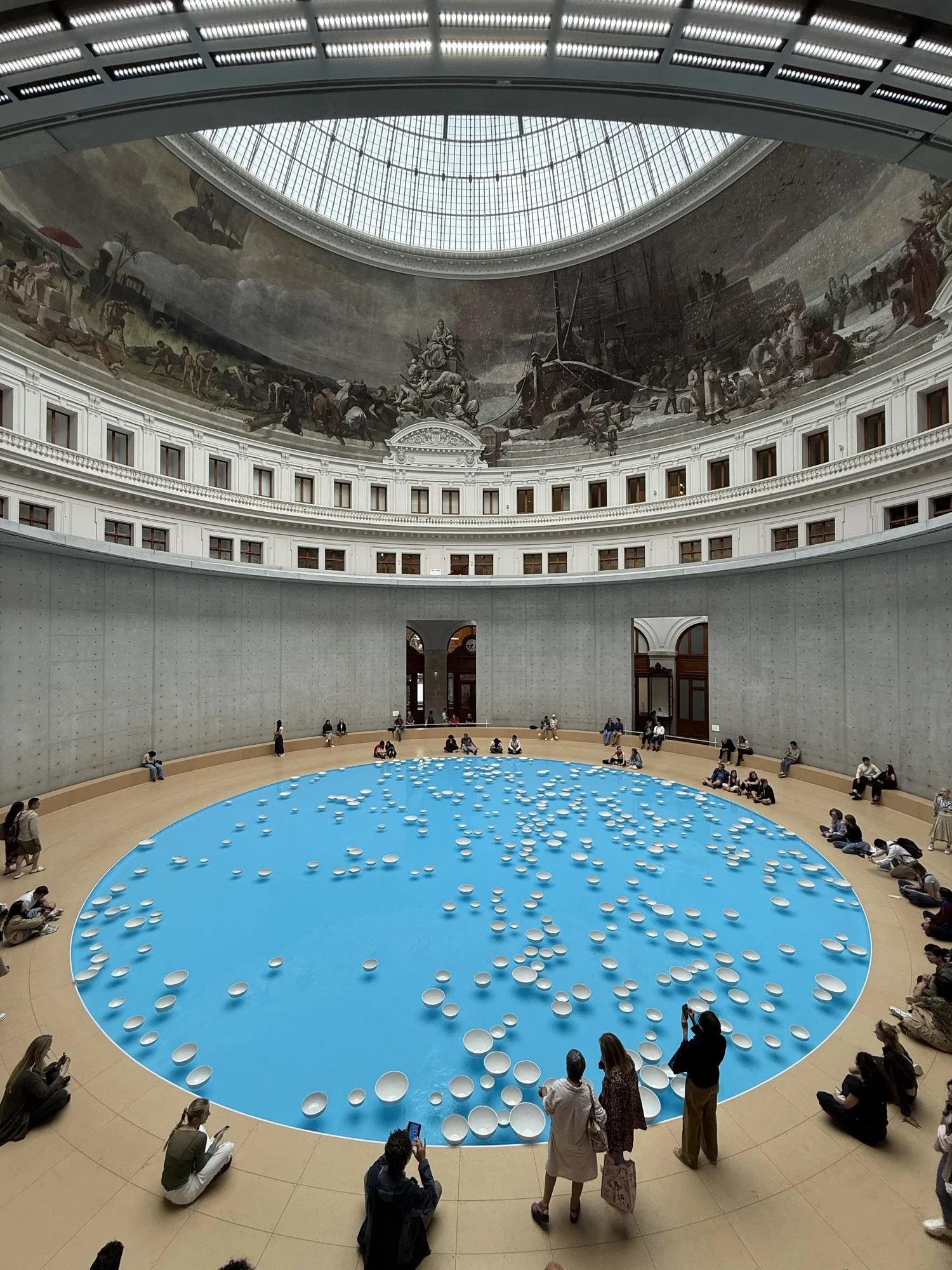
Céleste Boursier-Mougenot, an aquatic and musical installation titled "clinamen"
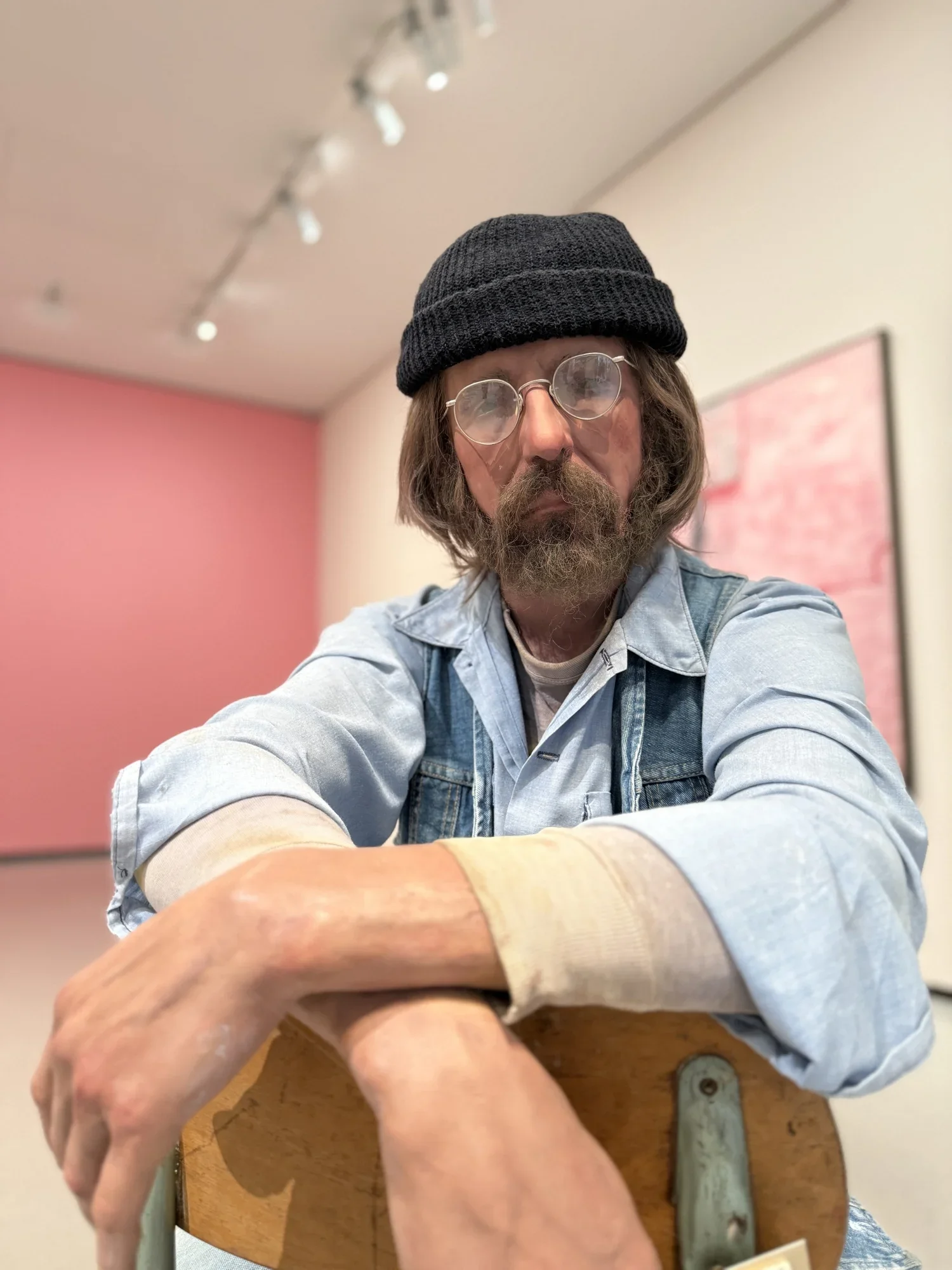
Duane Hanson, “Seated Artist”
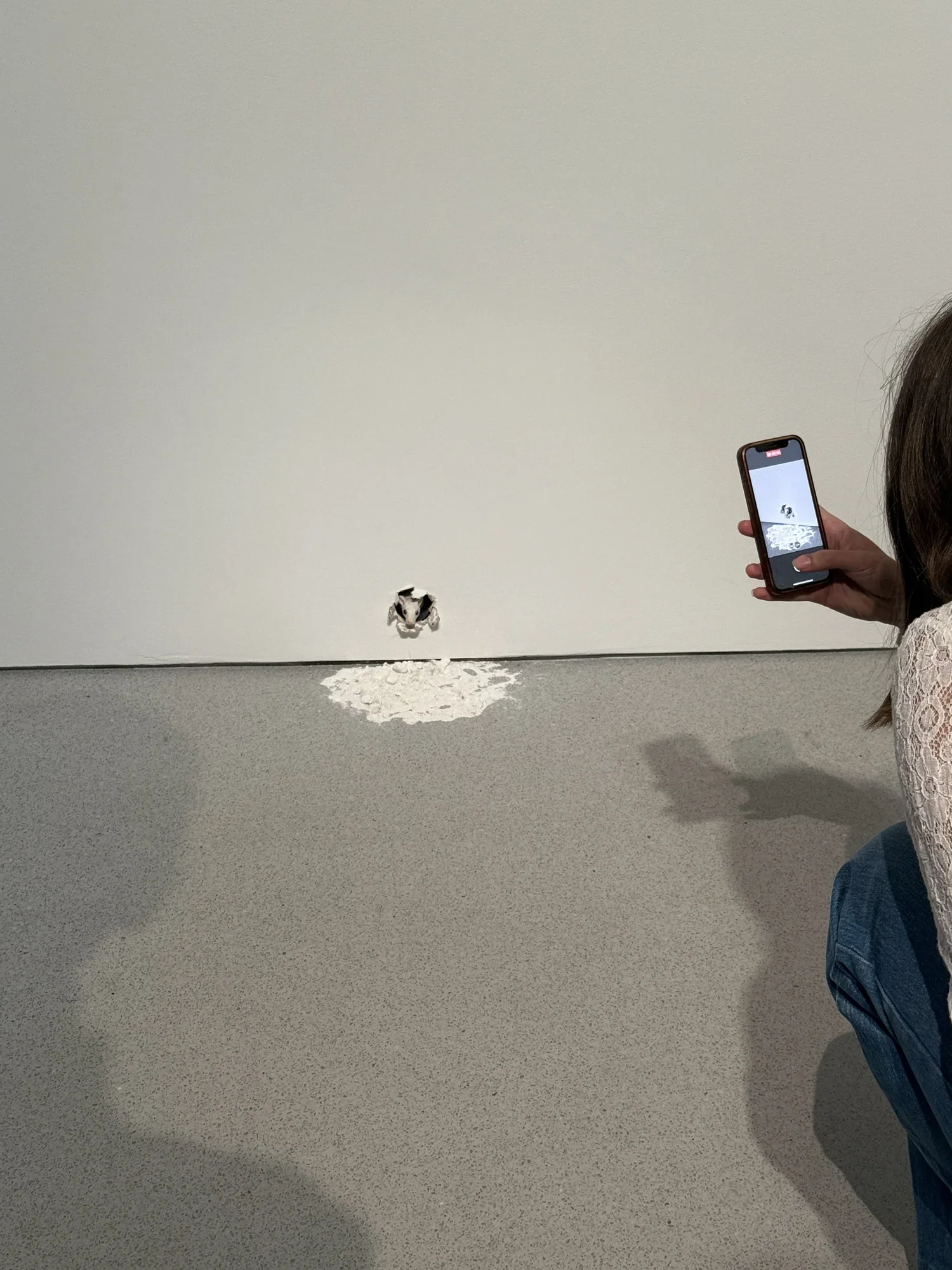
Ryan Gander “Ever After: A Trilogy (I... I... I...)”
Bourse de Commerce
Francois Pinault’s 10,000 piece collection (one of the most significant collections in the world) turned museum - designed by Tado Ando and opened to the public in May of 2021. Leave yourself time, and just see everything. This was one of the more sensational spaces and an explicit example of why Paris matters now.
Pro-tip: if you are travelling with children, send them on a mission to find the secret artwork by Ryan Gander (a Hitchcock-like cameo where his art can be found hidden at the trifecta of Pinault galleries across France and Italy.
Also for kids (and adults who will see the work differently): I’ve long admired the work of Duane Hanson for the sheer wow-factor, but this is a deeper, and more personal expression from anything I’ve seen from him before (a reflection of the time we are living in, as many artists are trying to figure out their place in the world)
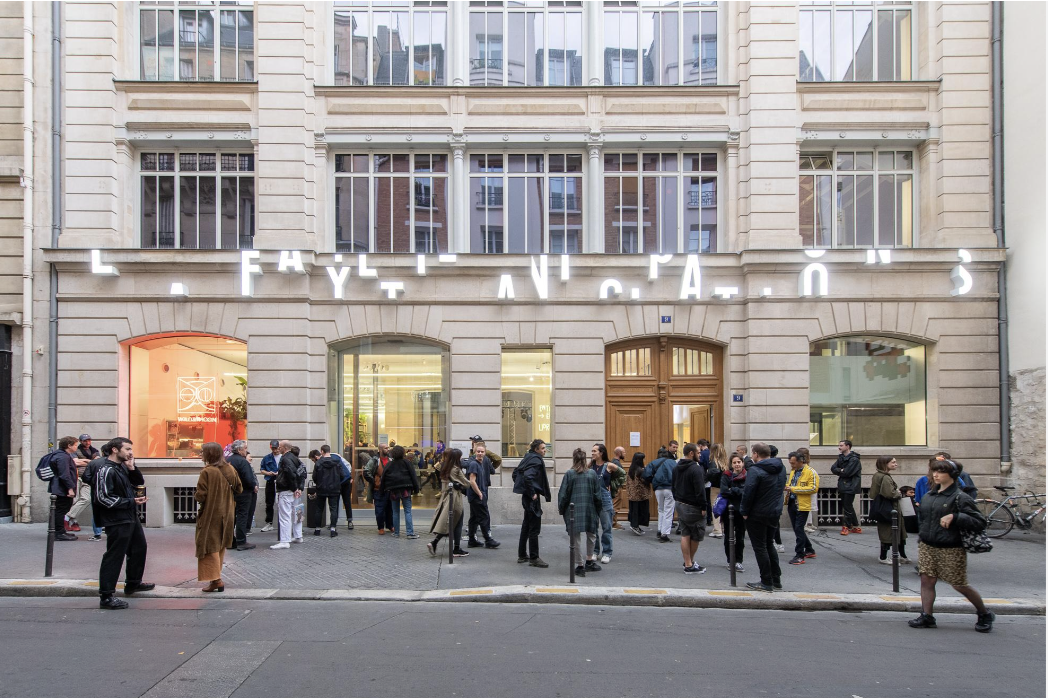
Lafayette Anticipations
“Design Disco Club” an exhibition to coincide with Paris Design Week opens September 6th, 2025.
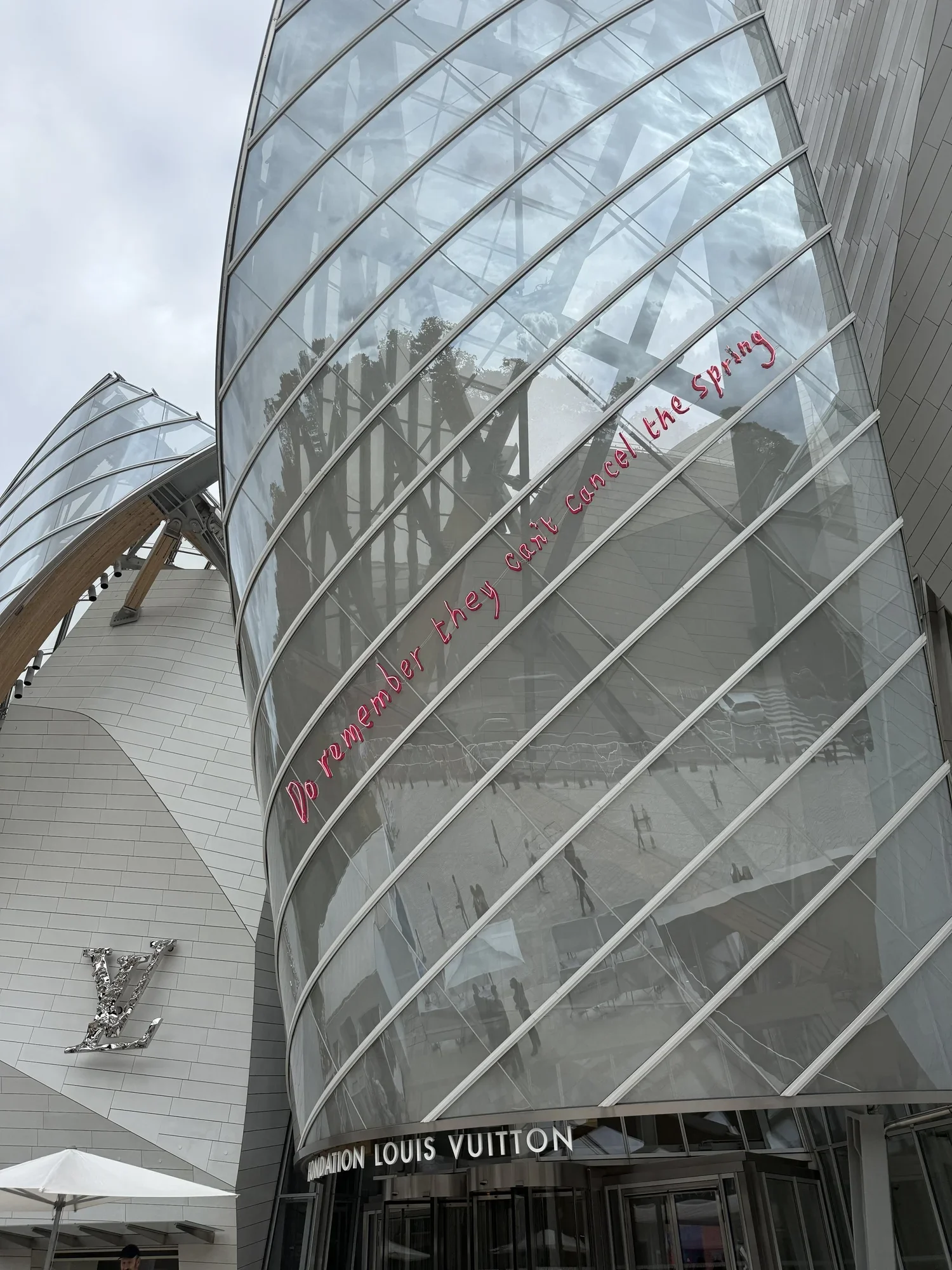
David Hockney “Do Remember They Can’t Cancel the Spring” at Fondation Louis Vuitton
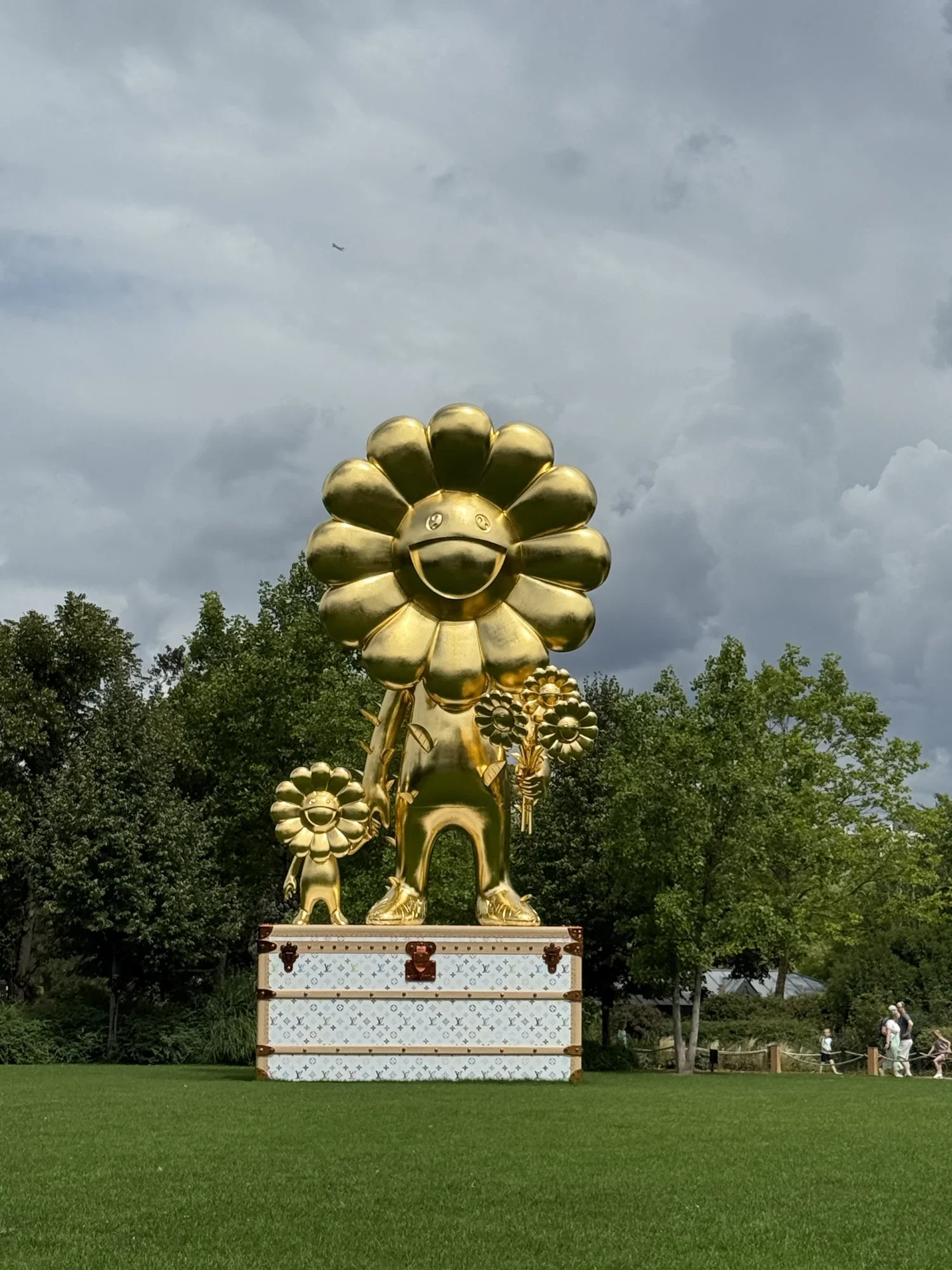
Takashi Murakami “Flower Parent and Child"
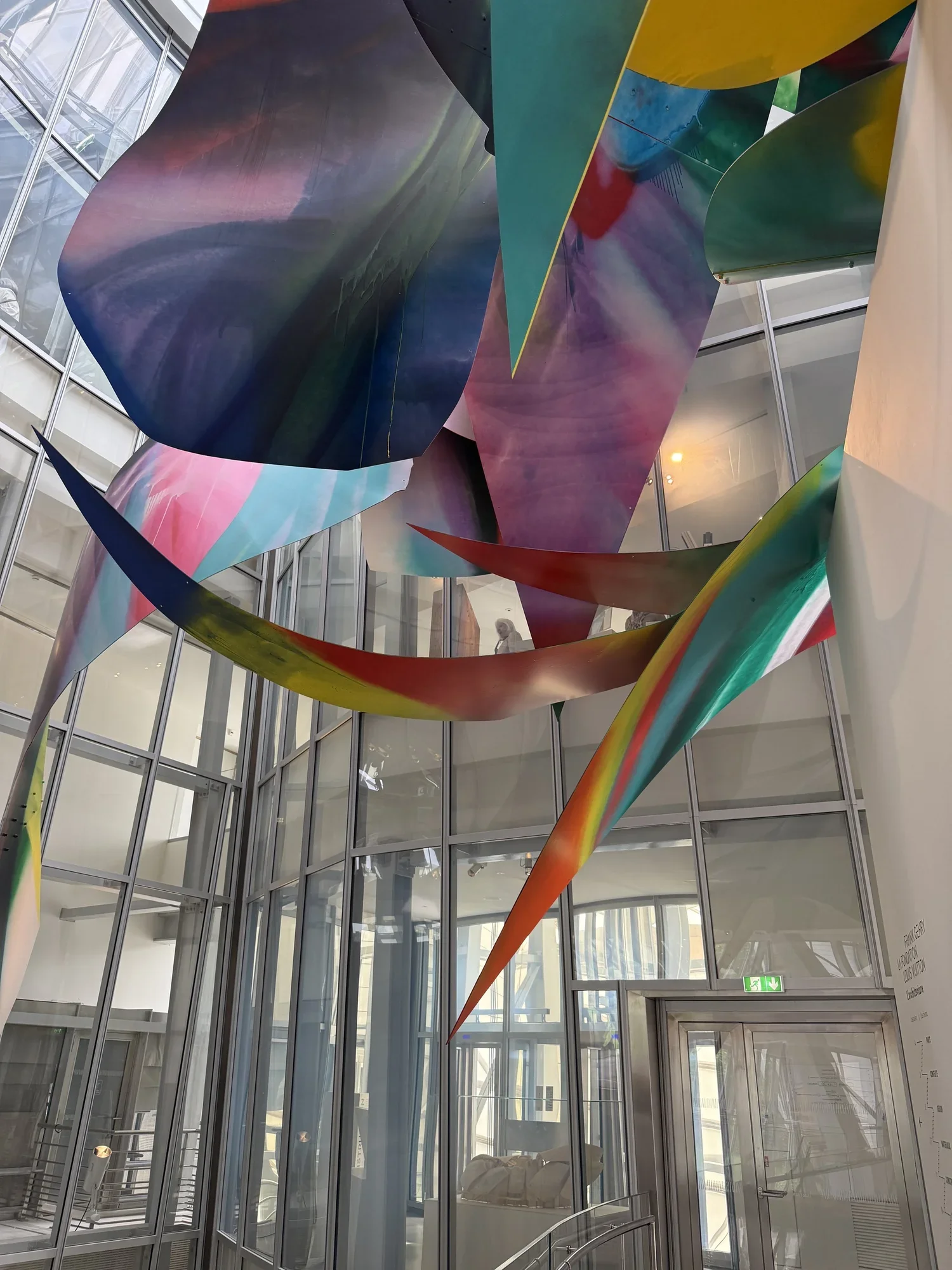
Katharina Grosse, “Canyon”
Louis Vuitton Foundation
Designed by Frank Gehry and opened in 2014, get your tickets in advance as this place has now been discovered by the onslaught of global tourism.
Don’t miss the permanent architecture exhibition, and the murakami sculpture outdoors (if ever there was an example of the blurring boundaries between art and fashion; this is it).
“David Hockney 25” til September 1, 2025. It converted me into a fan, his moon room particularly (and can we talk about the excellent lighting?!). I found the immersive experience on the top floor - trying, however. If you really want to see this type of thing, the OG is in a quarry in the south of France (the Carrières des Lumières, founded in 1959 by filmaker Jean Cocteau).
Olafur Eliasson’s installation on the ground floor is worth seeking out because…Olafur Eliasson (his installation at the Tate is forever burned into my memory).
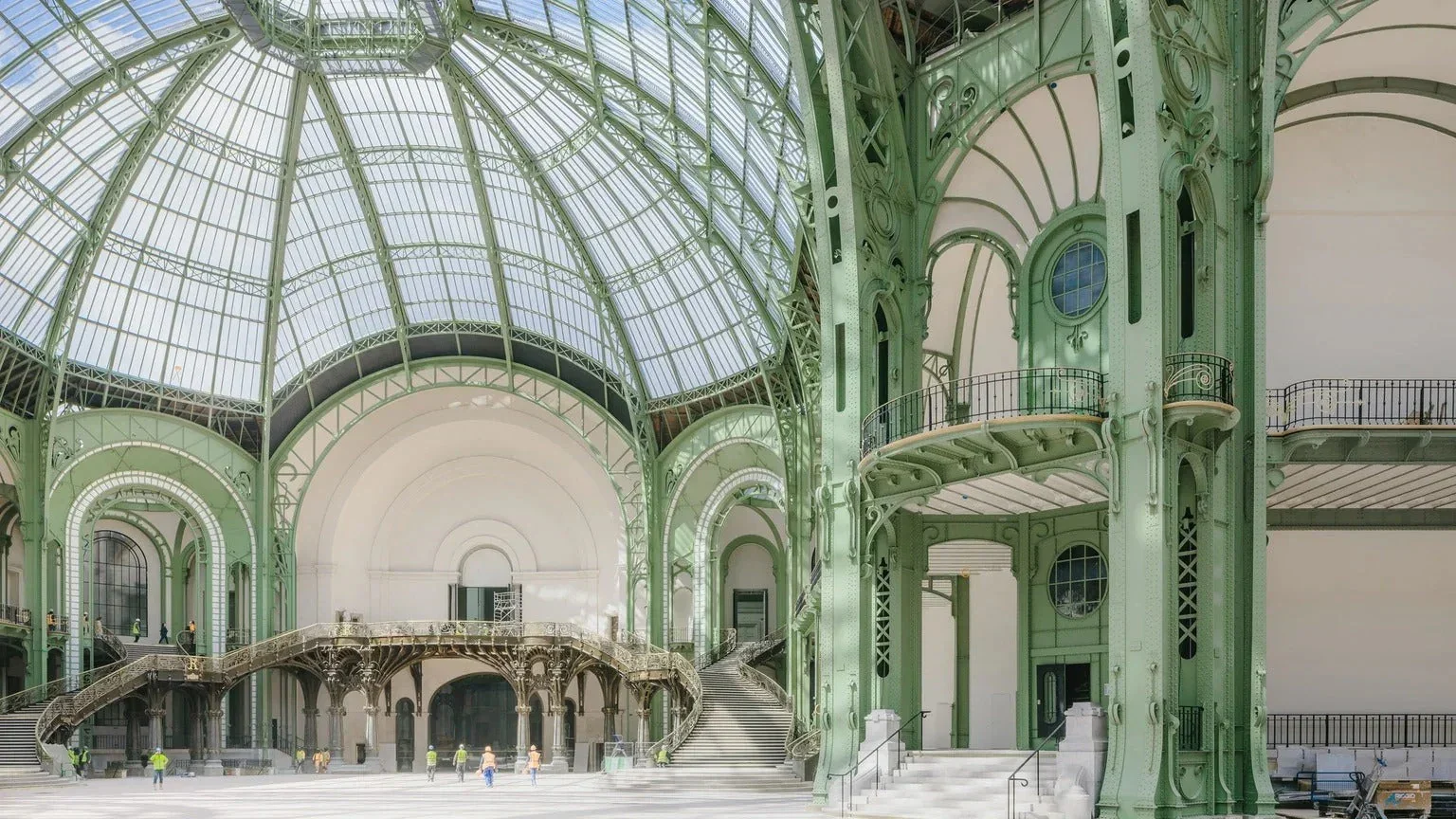
Grand Palais Restoration
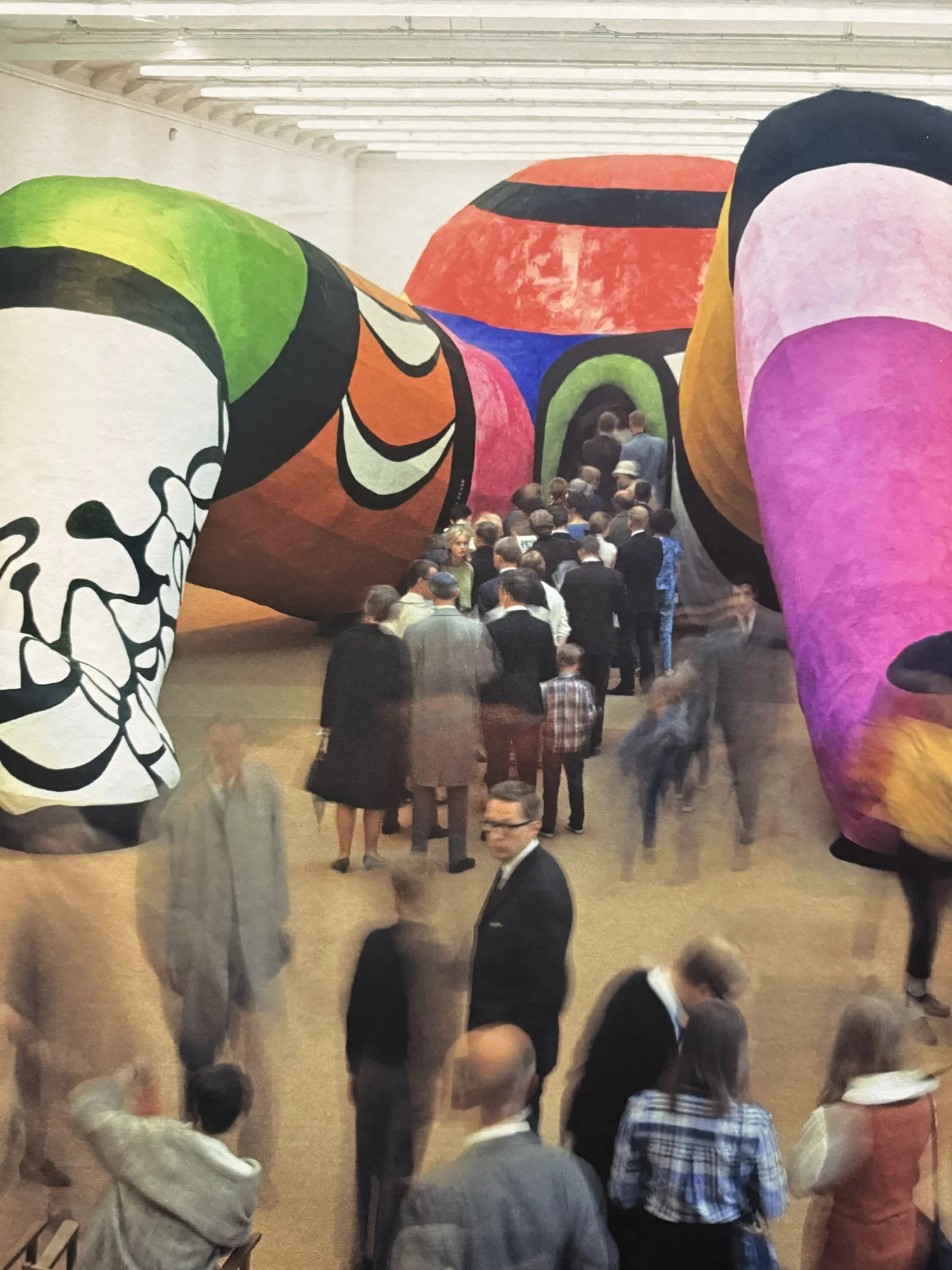
Niki de Saint Phalle
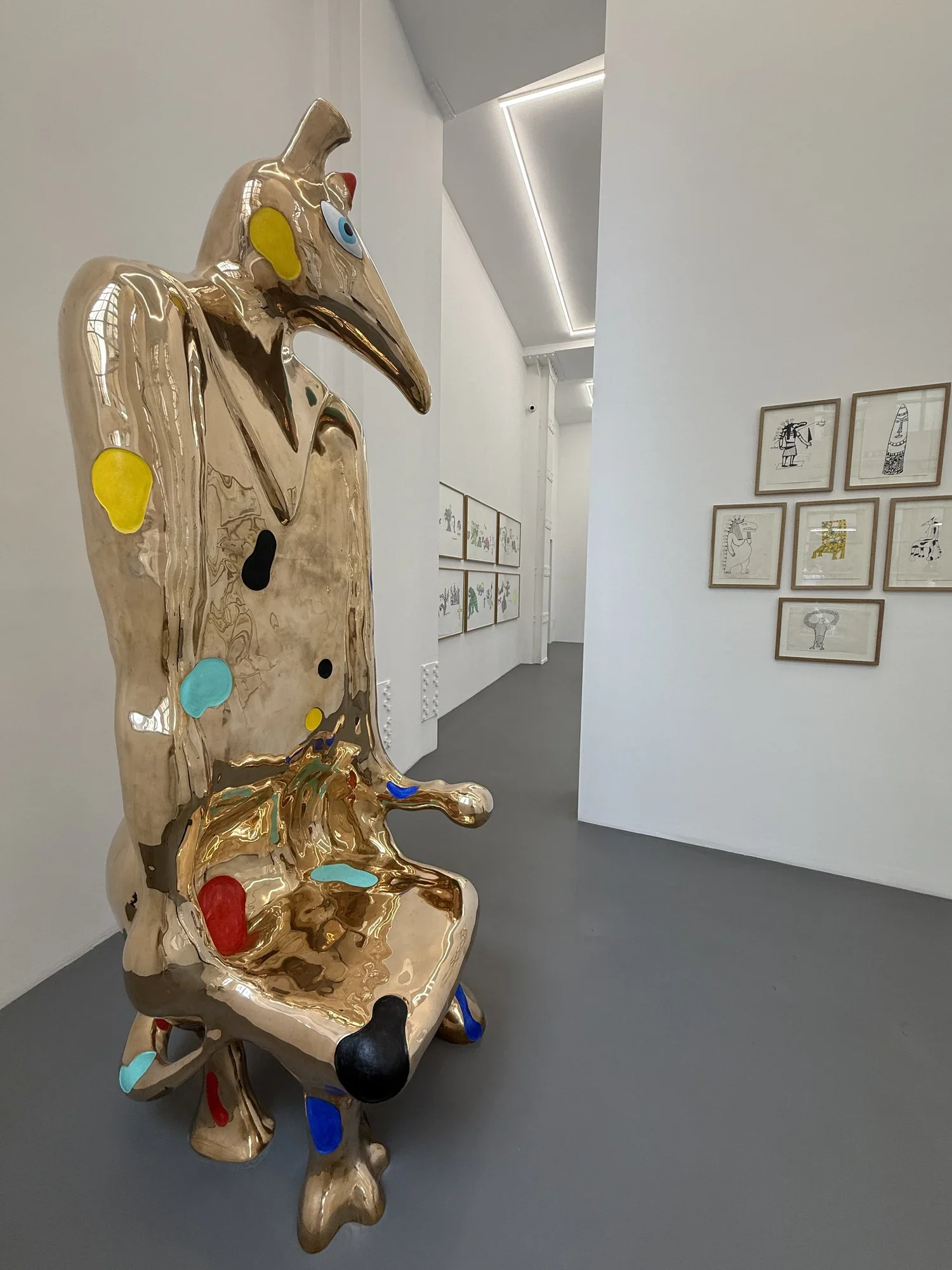
Niki de Saint Phalle “Mythologie” (showing concurrently at Galerie Mitterrand)
Grande Palais
A remarkable example of Art Nouveau created for the 1900 World’s Fair, recently restored, and the new home of Art Basel Paris
The “Niki de Saint Phalle, Jean Tinguely, Pontus Hulten” exhibition is a must-see to truly understand contemporary French culture (this is a Pompidou satellite exhibition space during their renovation). Note: Niki de Saint Phalle has a major retrospective at the Musée national des beaux-arts du Québec in Quebec City until January 2026.
Don’t miss the elaborate Philippe Servent-designed curtains commissioned by Chanel as part of “Le 19M” - a cultural incubator of more than 700 artisans, founded by Chanel in 2021 (an exhibition in their gallery space will open on September 24, 2025).
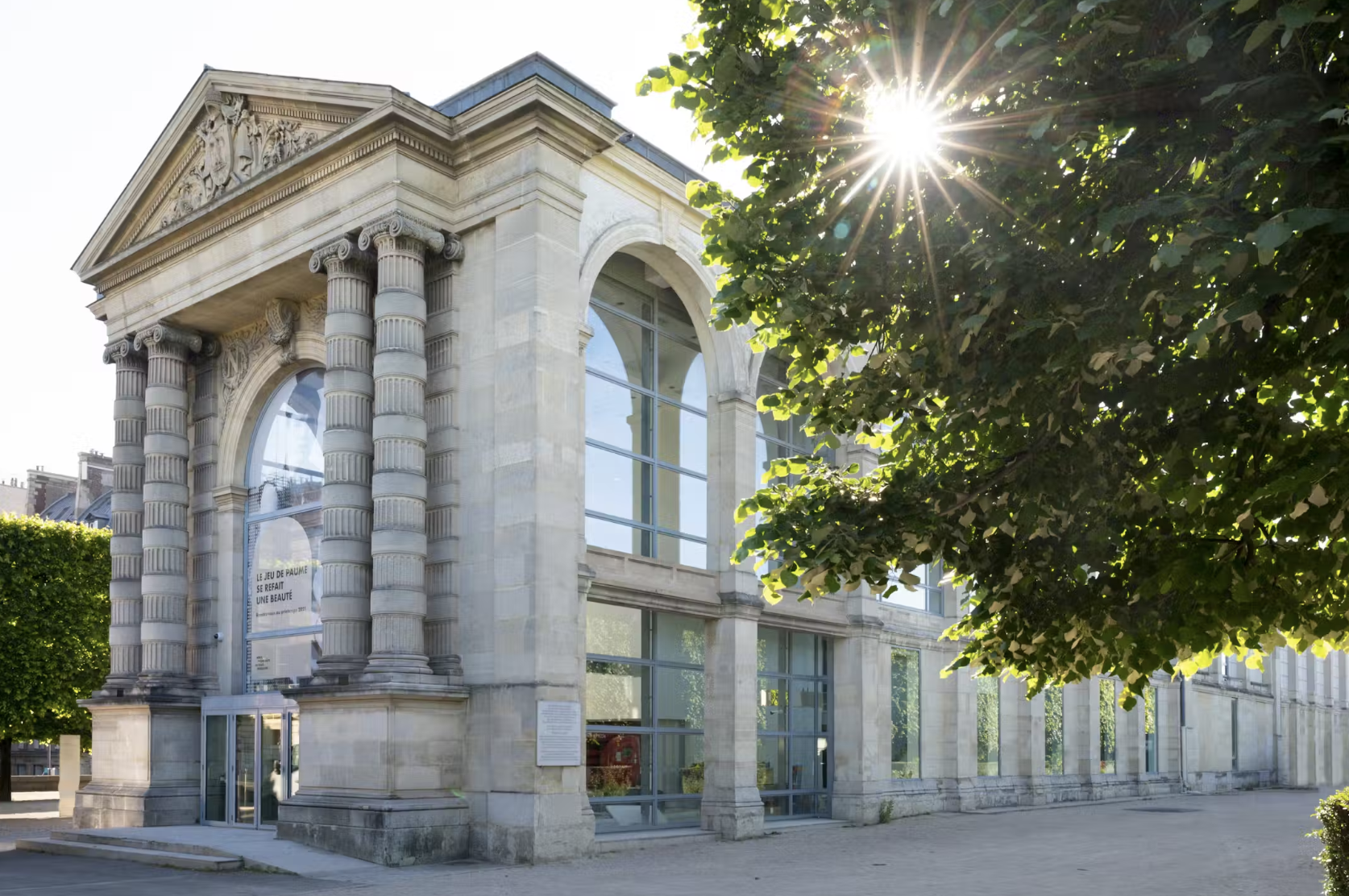
Jeu de Paume in the Jardin des Tuileries
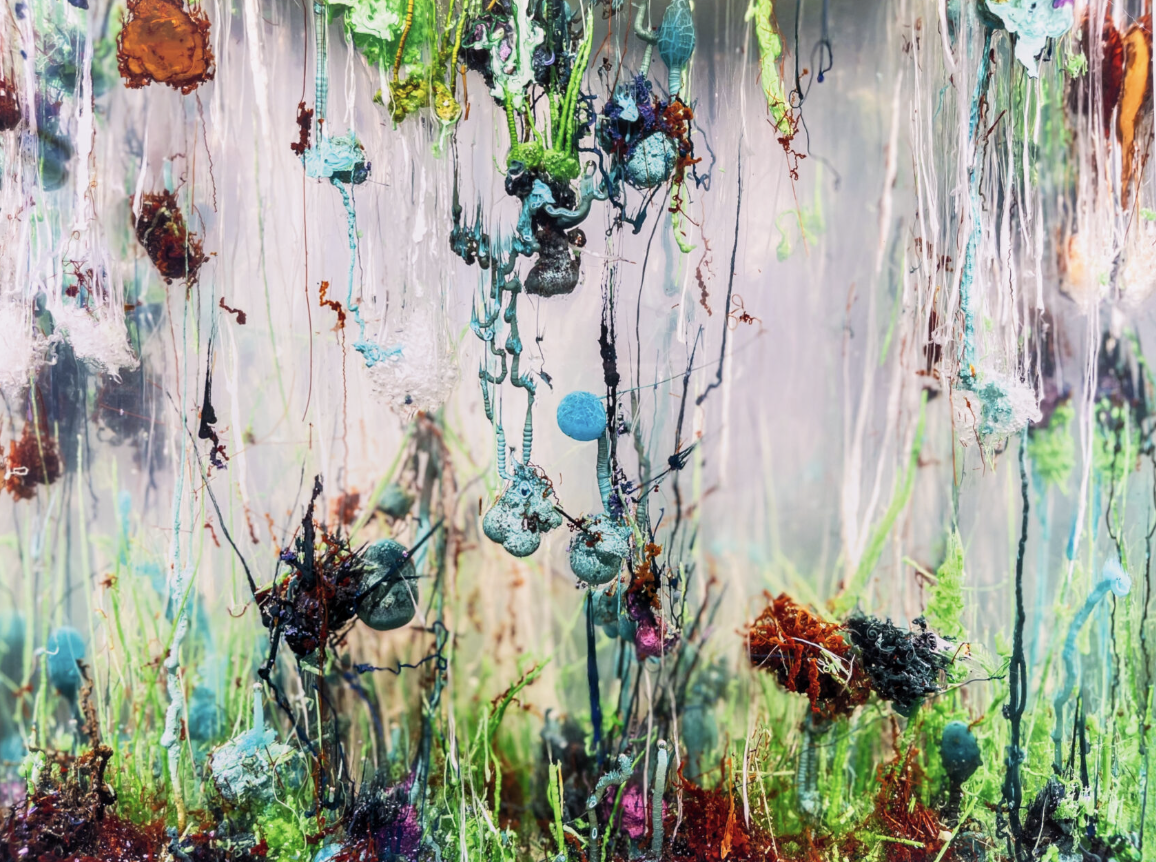
Agnieszka Kurant, nonorganic life 1
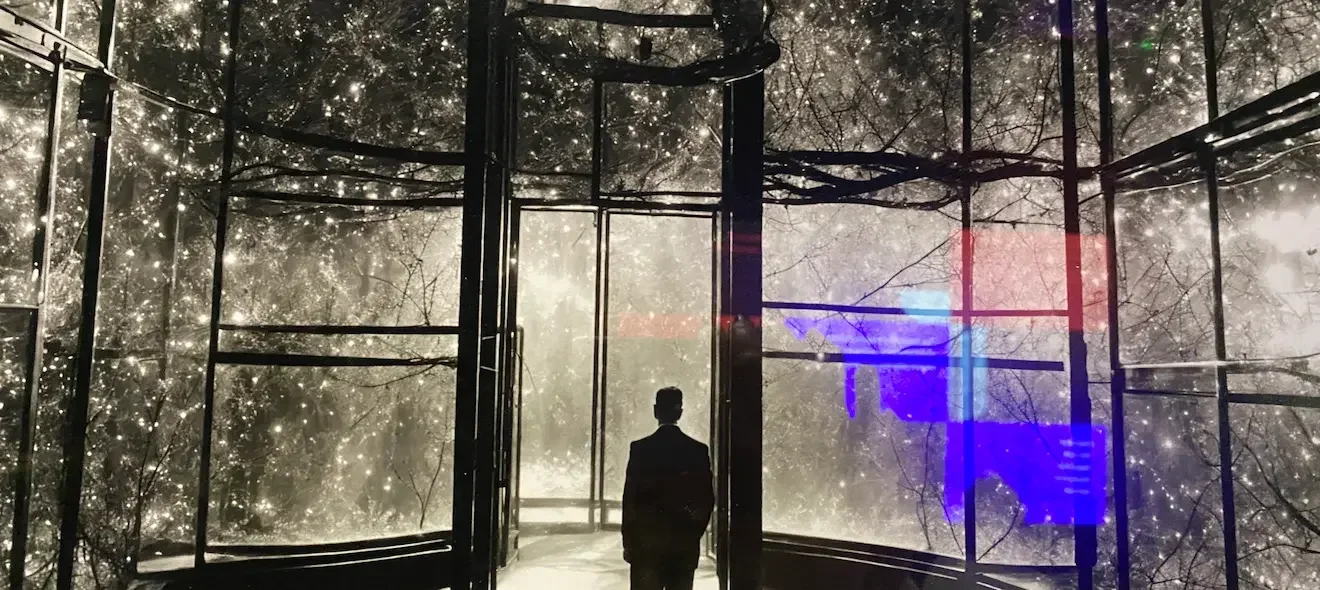
Julian Charrière, The World Through AI
Jeu de Paume
Jeu de Paume is a renowned art center and museum dedicated to photography and contemporary image-based art currently hosting an exhibition titled “The World Through AI”.
Fascinating, and certainly a perspective on this heady topic best seen through the minds of artists. This was a buzzy exhibition that a number of curators I spoke with mentioned as a must-see. To September 21, 2025.
Artists to watch out for; Agnieszka Kurant and Julian Charrière
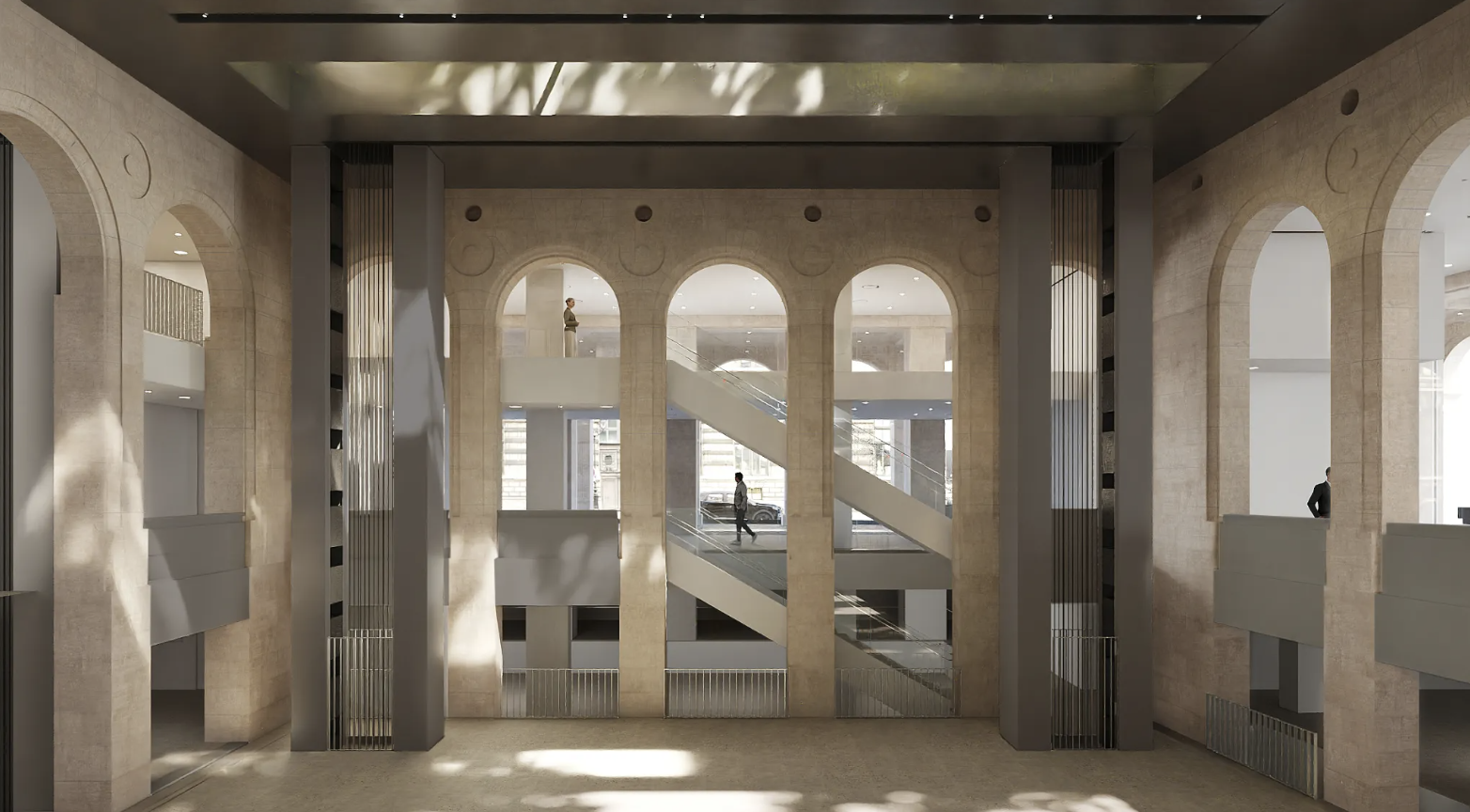
Rendering of the Fondation Cartier at place du Palais-Royal, renovated by Pritzker Prize–winning French architect Jean Nouvel
Fondation Cartier de l’art Contemporain (Opening Fall 2025)
the gallery will open with a survey of artworks from their collection, ticketing to the venue will open on September 23).
COMMERCIAL SPACES
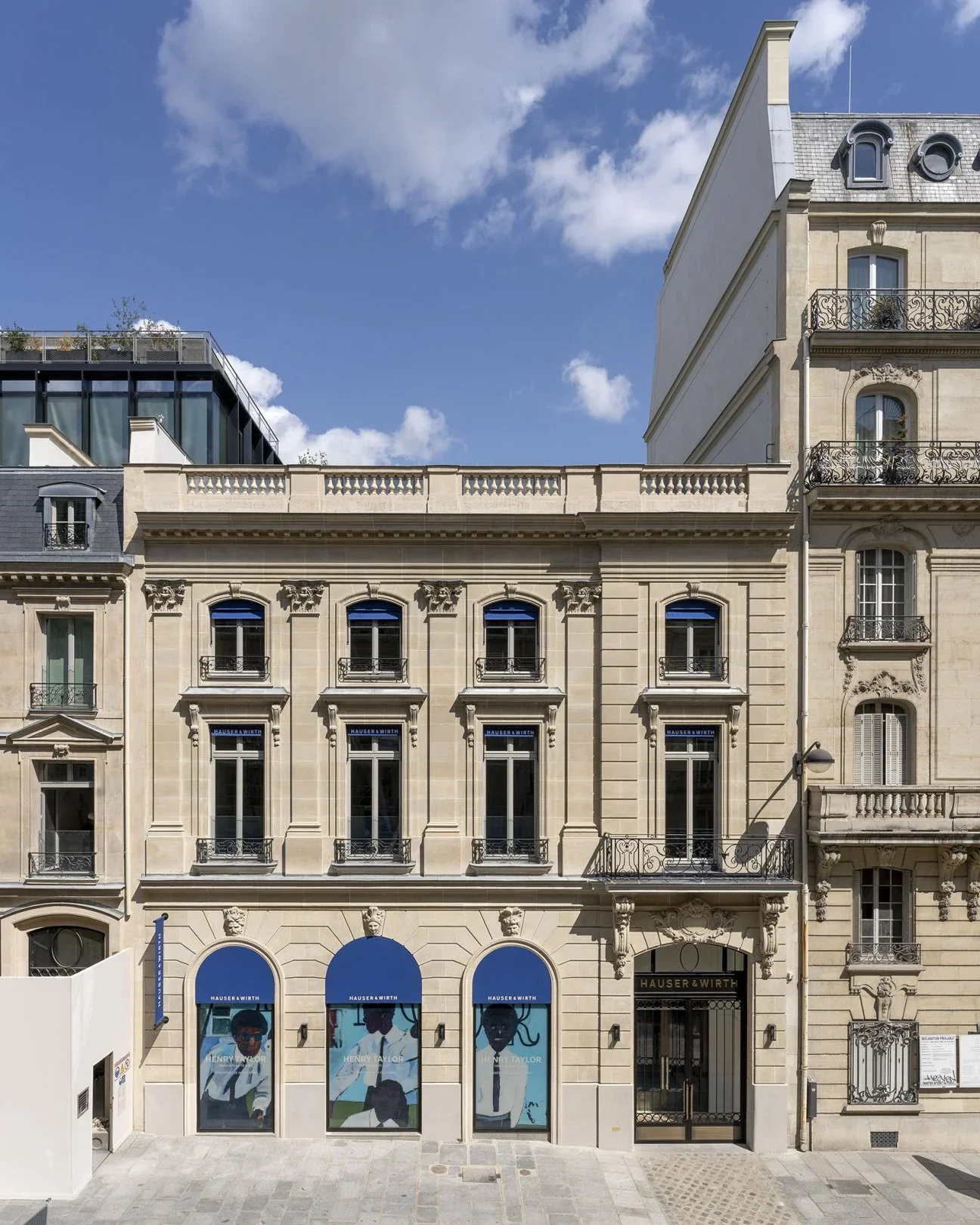
Paris outpost of Hauser & Wirth
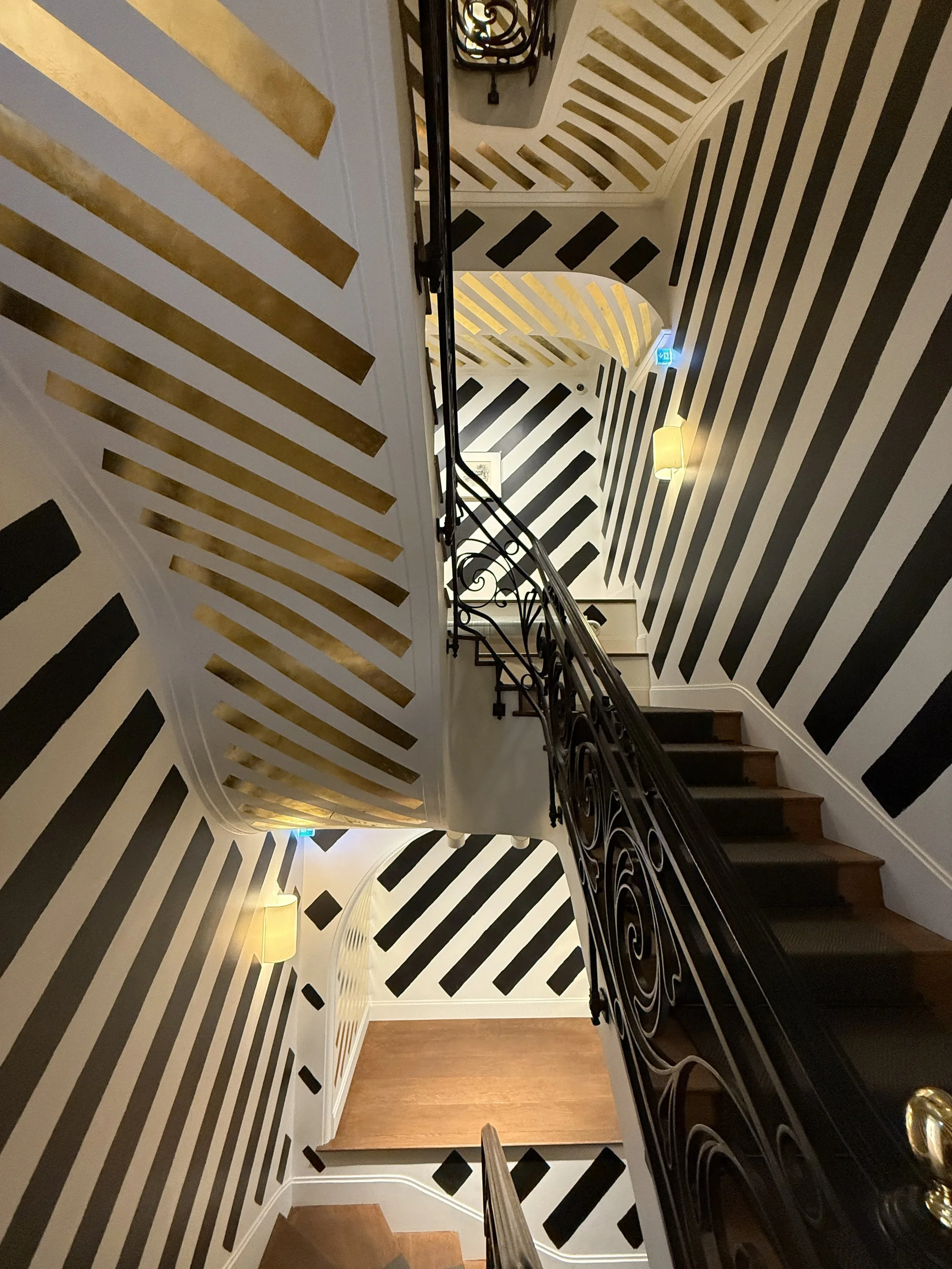
Martin Creed, Work No. 3839
Hauser + Wirth
The first ever outpost by this mega-gallery housed in a 19th-century hôtel particulier near the Champs-Élysées. Note the installation in the stairwell by the artist Martin Creed, “Work No. 3839”
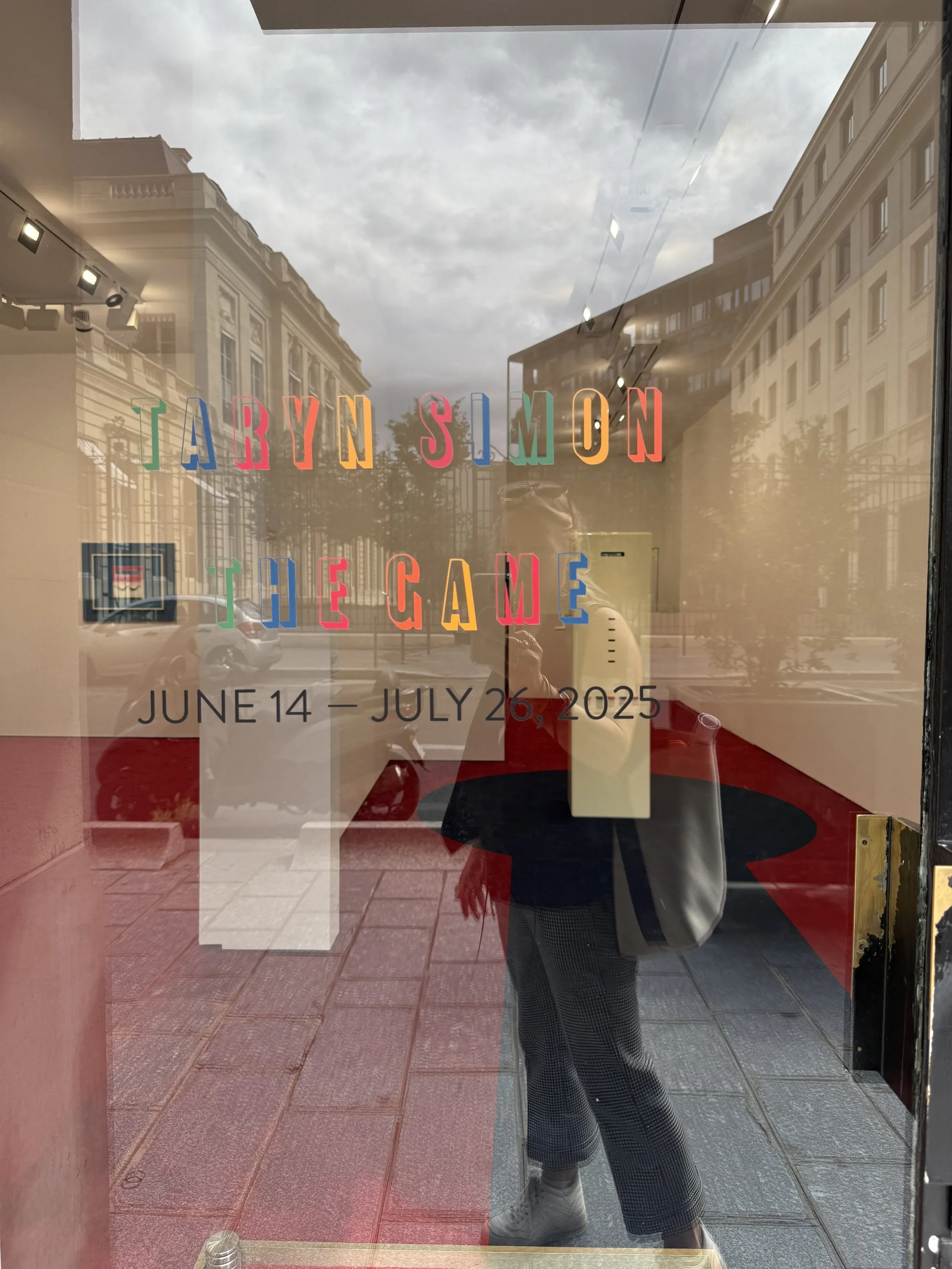
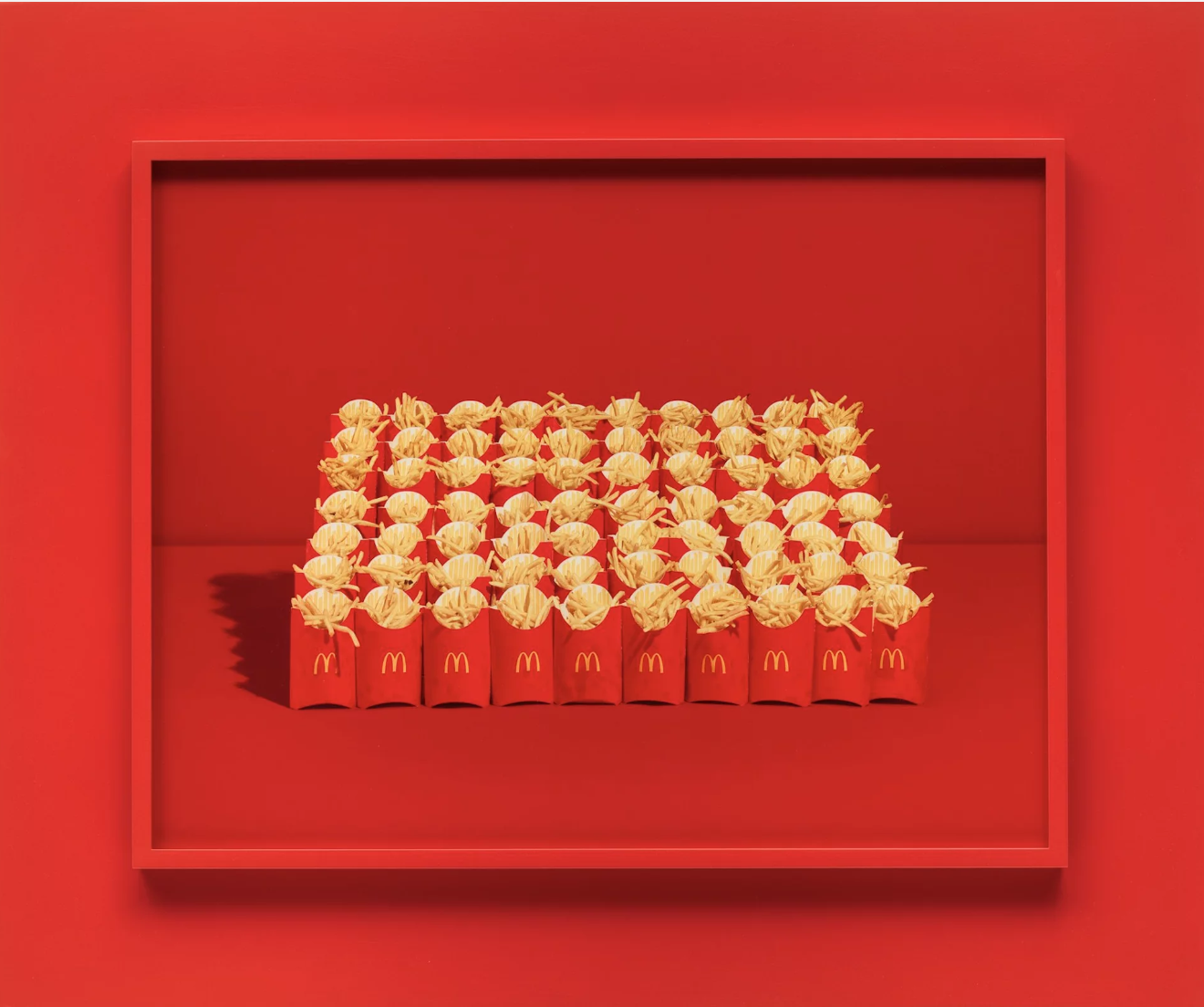
Taryn Simon McDonald’s French Fries, Feasterville-Trevose, Pennsylvania, 2024
Almine Rech, Matignon
“Taryn Simon, The Game”. They transformed the gallery space into a work of art in itself. It will have ended by the time you’re reading this, but any gallery will facilitate a private viewing (reach out if you want me to arrange that for you).
Also, if you’re there, pop into Christie’s across the street and ask them to show you the Rebecca Marks installation; they’ll take you right into the window.
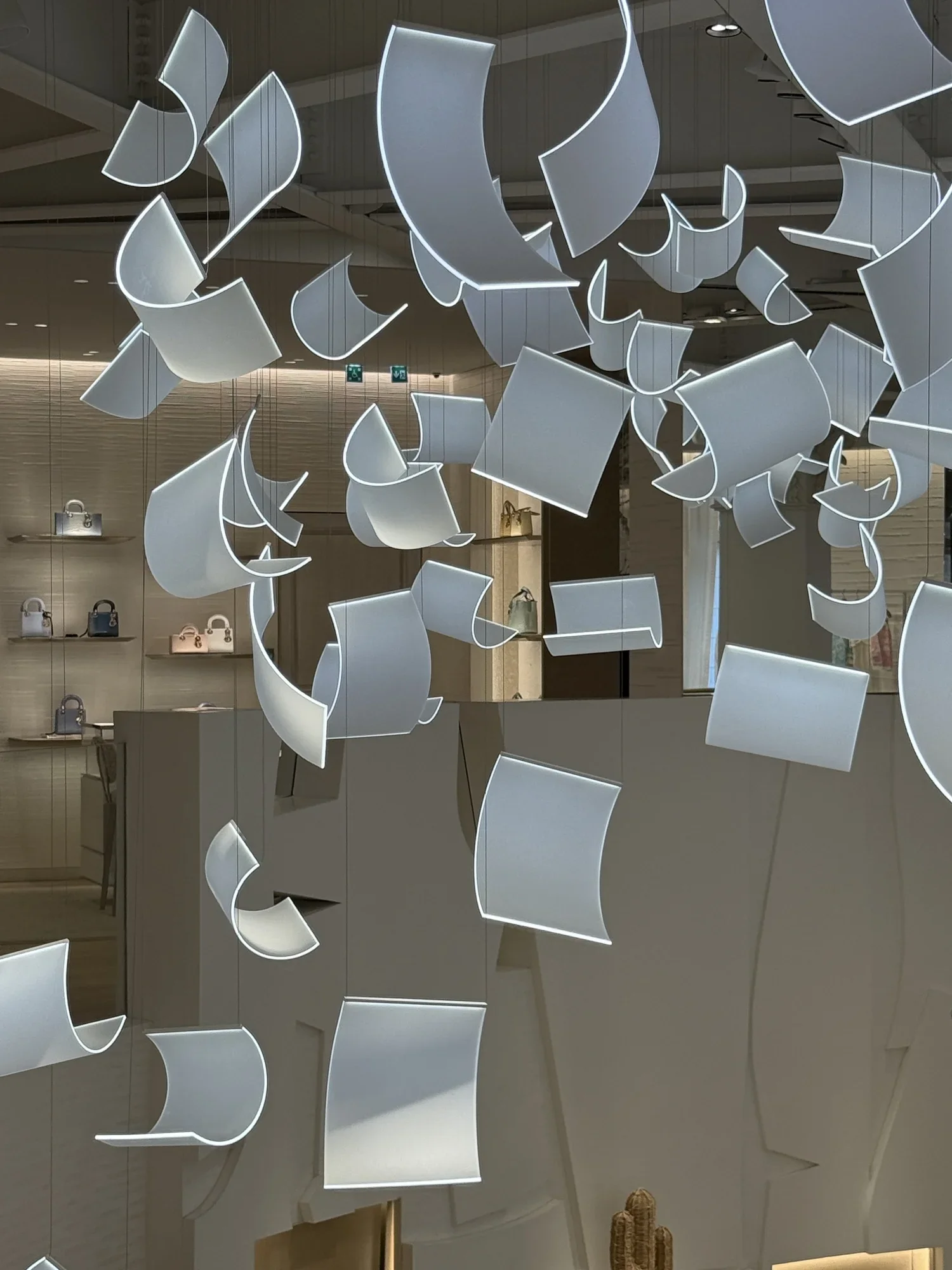
Paul Cocksedge, Bourrasque
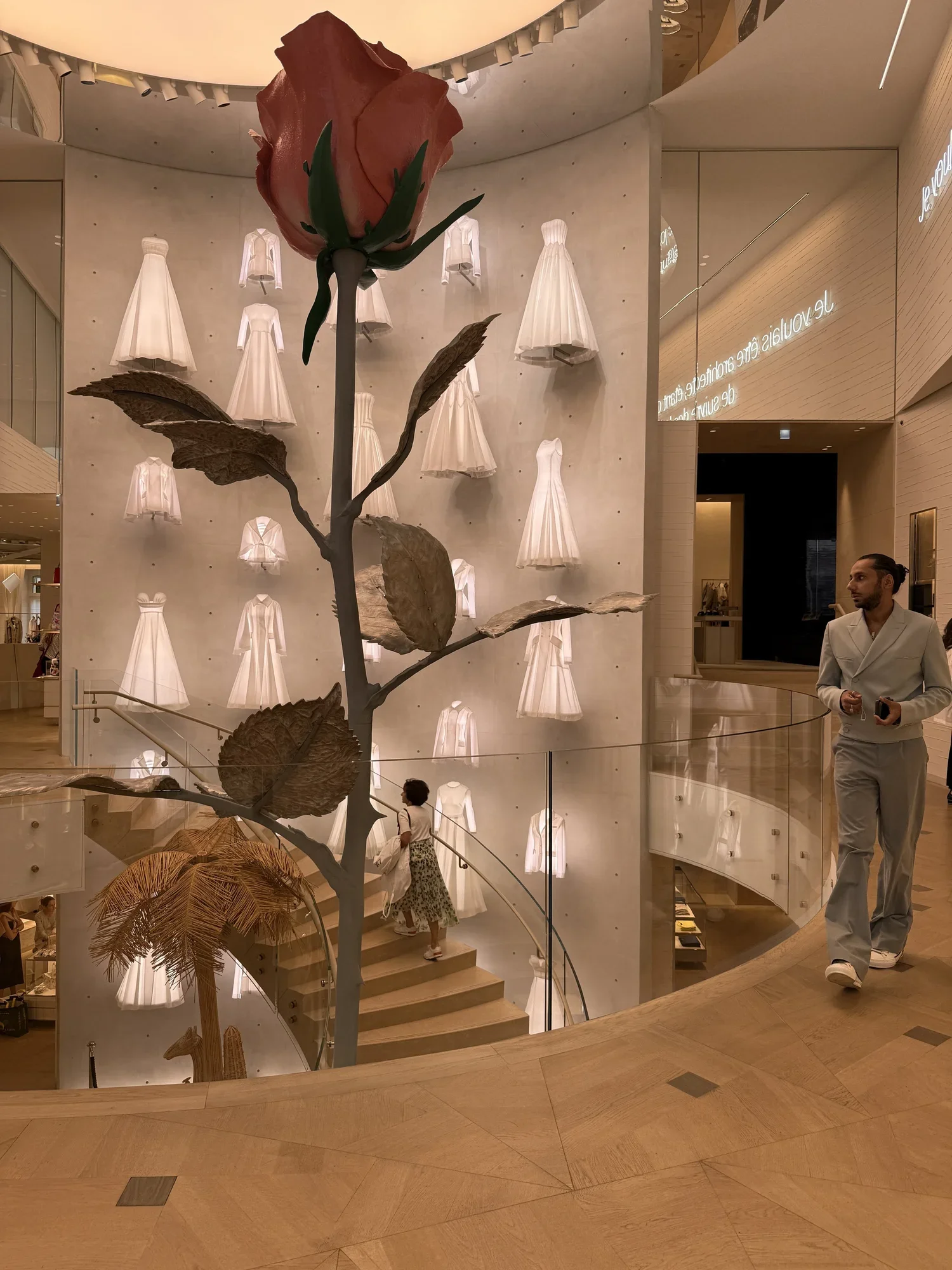
Isa Genzken, Rose II
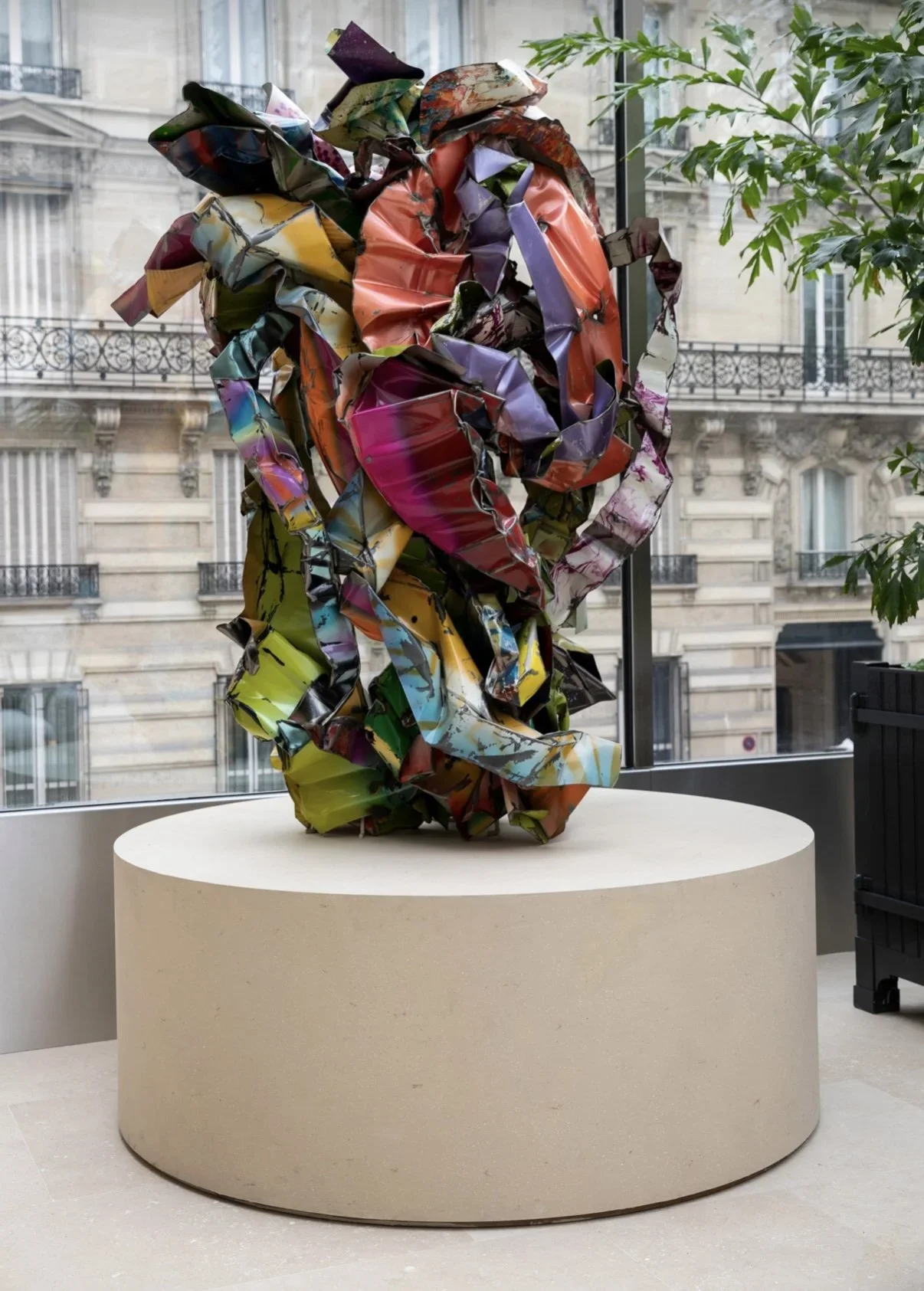
John Chamberlain, Mysting Tonatta
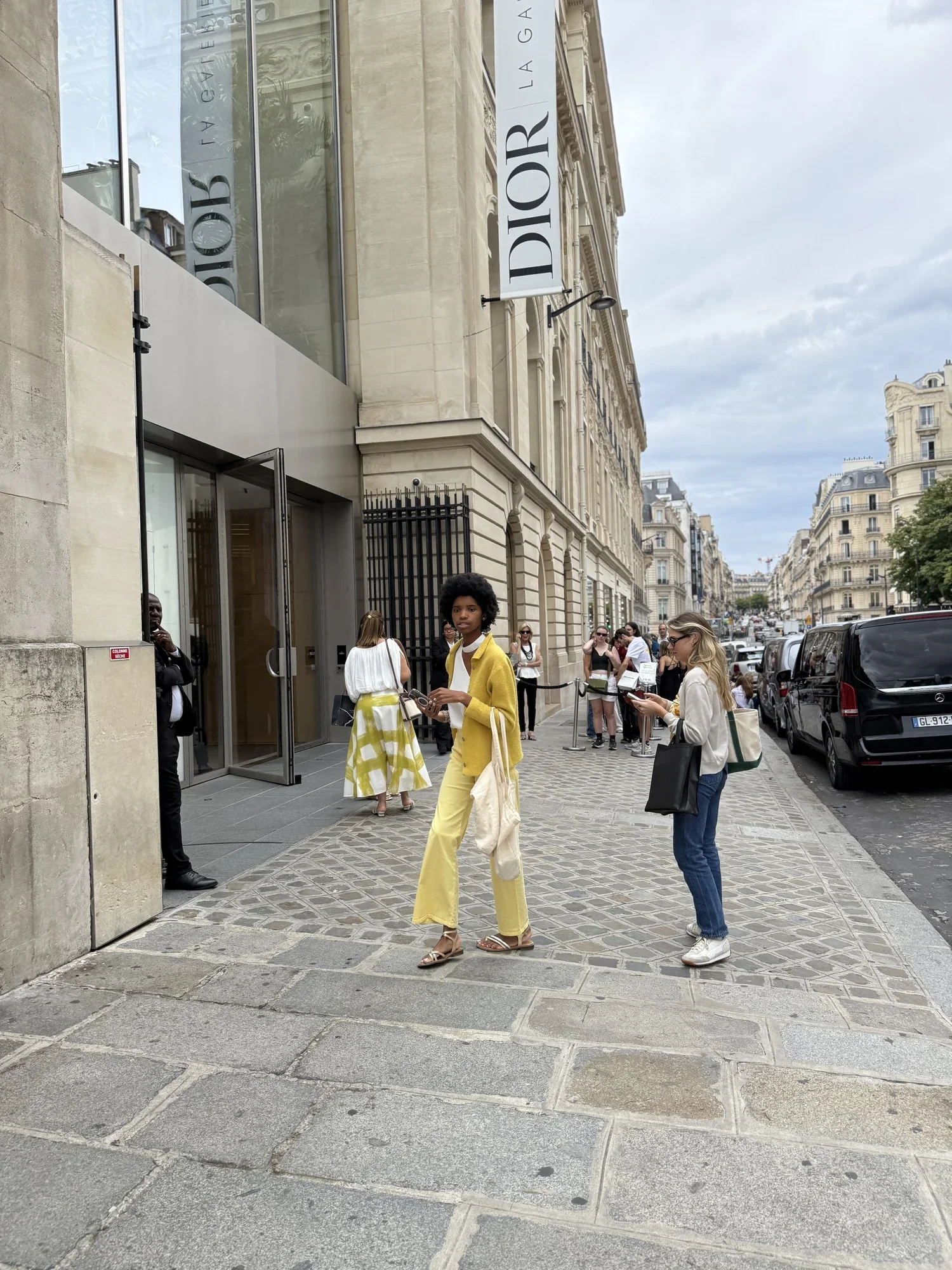
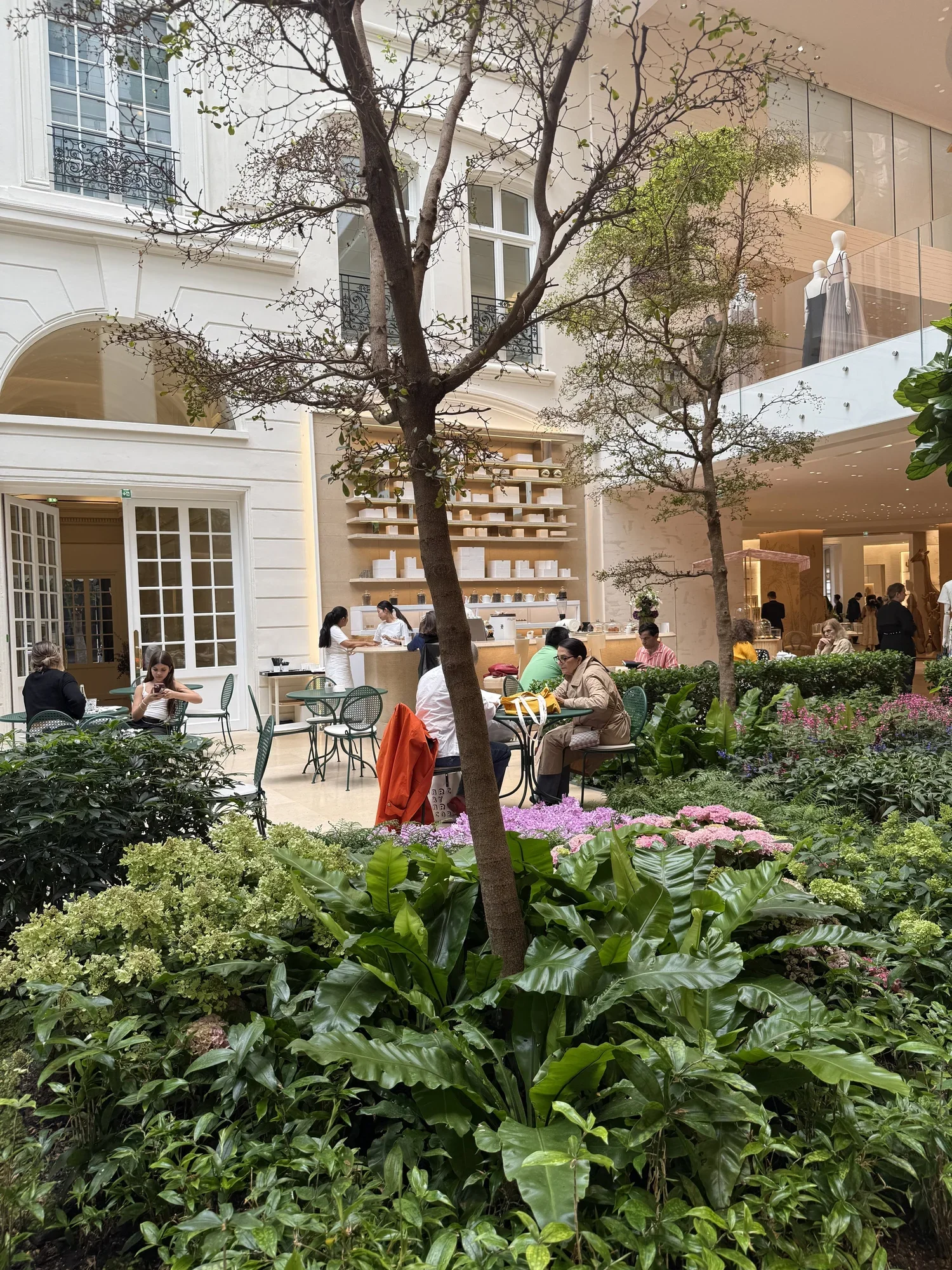
Dior Flagship Store
An excellent example of the obscuring lines between art and fashion (I especially appreciated the brass plate QR codes). Sit down and read about the art over a cafe au lait in one of their gorgeous gardens designed by Belgian landscape architect Peter Wirtz in collaboration with architect Peter Marino - surely one of the hidden gems of Paris.
Pro tip: the hidden bathroom on the second floor is fun for selfies 📸 😉
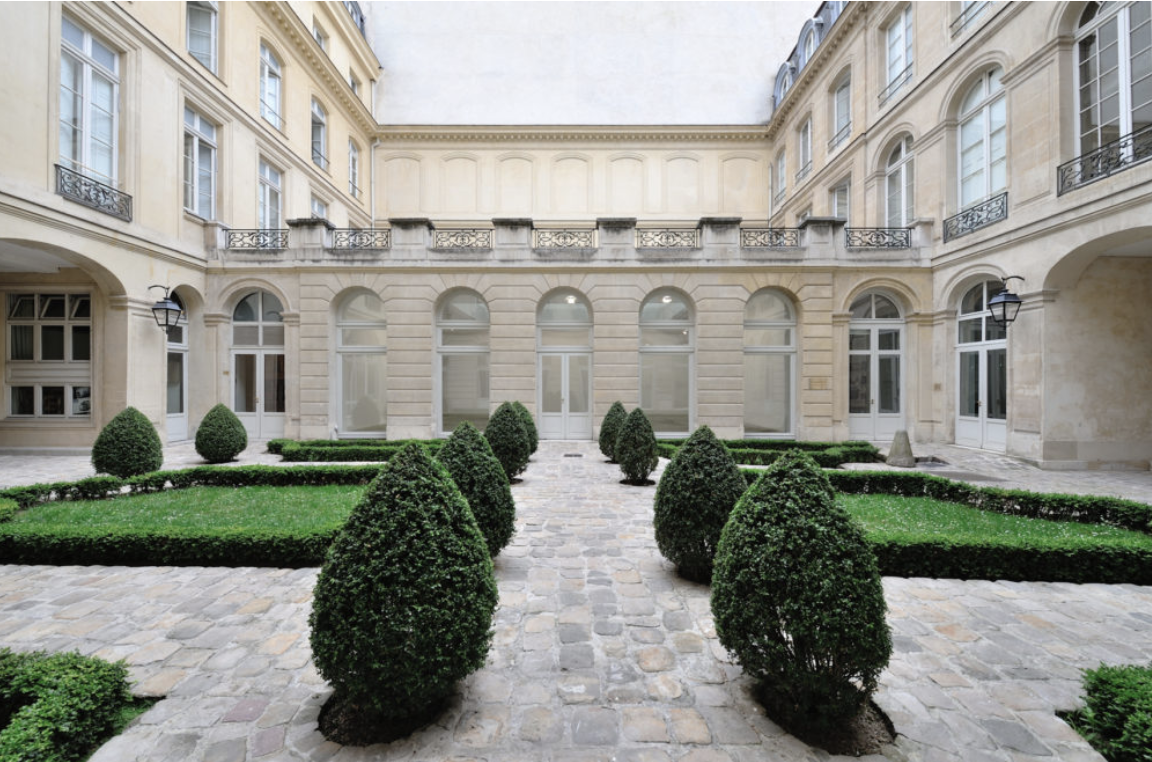
Marian Goodman Paris
Walking into Marian Goodman Feels like you’re entering into a private universe behind those fabulous Parisian doors, “Steve McQueen, Bounty” was on at the time of writing. A good example of a mega-gallery that has the funds to do something immersive with their exhibitions (and bonus, commercial galleries are always free).
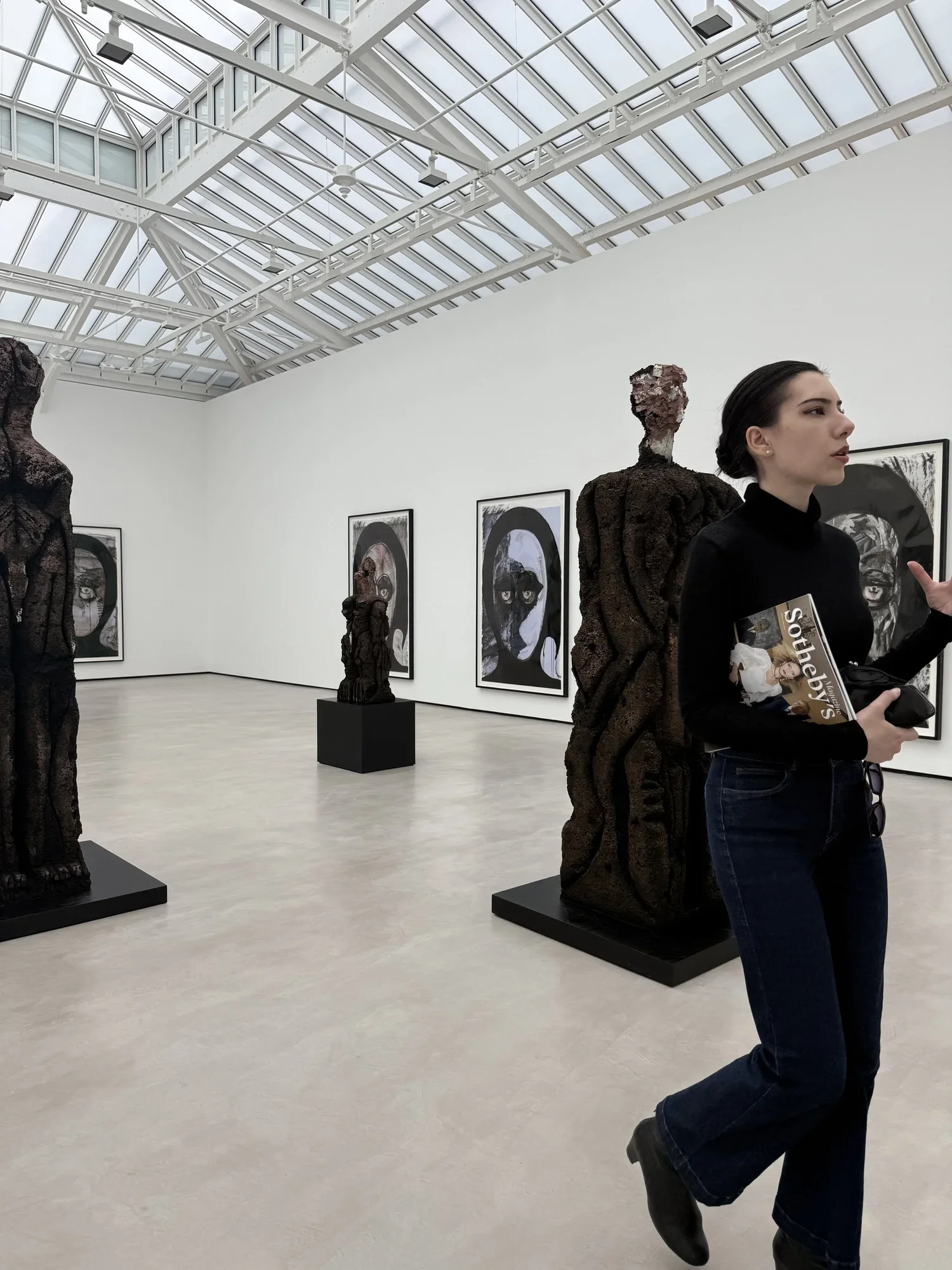
Huma Bhabha, Distant Star
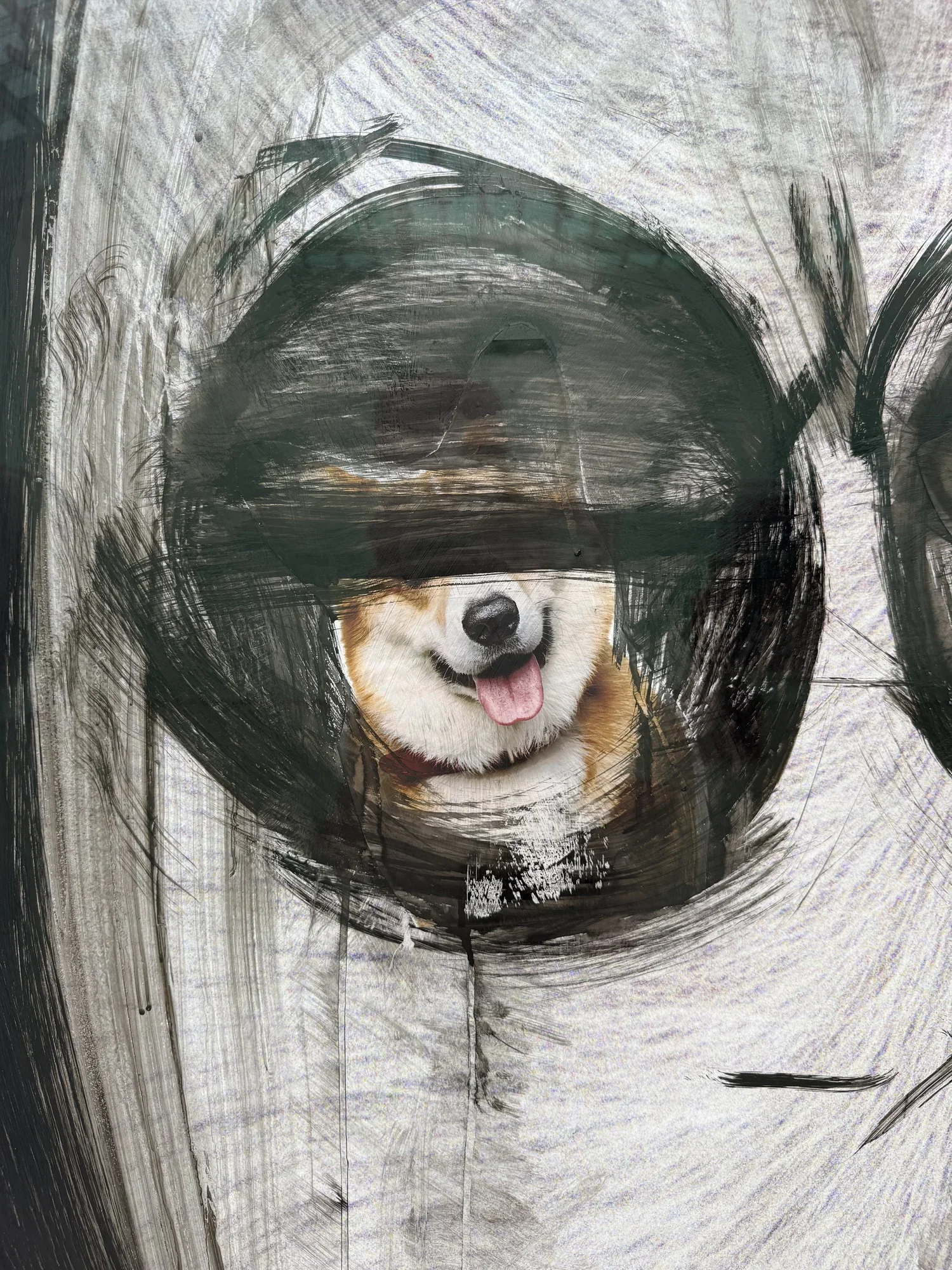
Huma Bhabha, Distant Star (detail)
David Zwirner
“Huma Bhabha, Distant Star” ask to see her additional installation on private view in the back, or better yet, ask me to book a private tour for a deeper understanding (a much better experience than reading the literature they leave out for the general public)
Perrotin
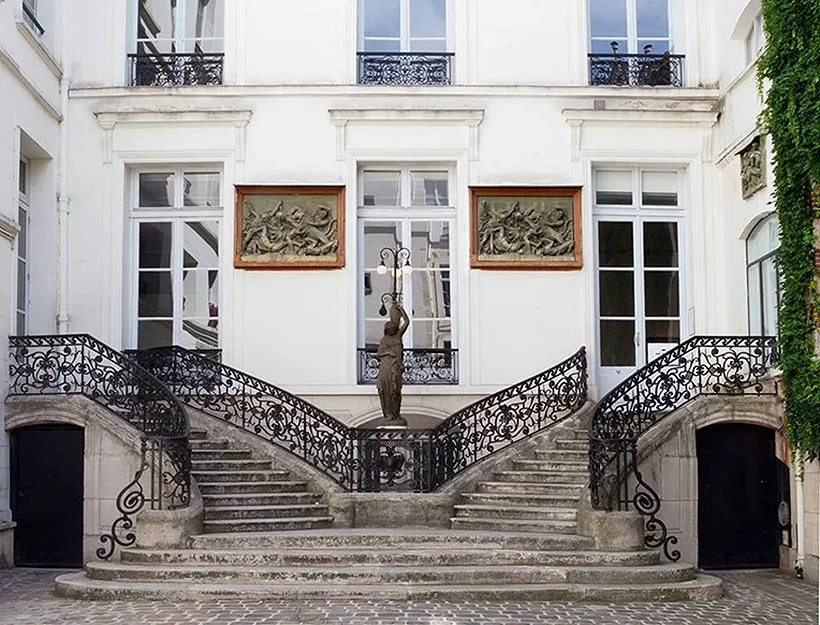
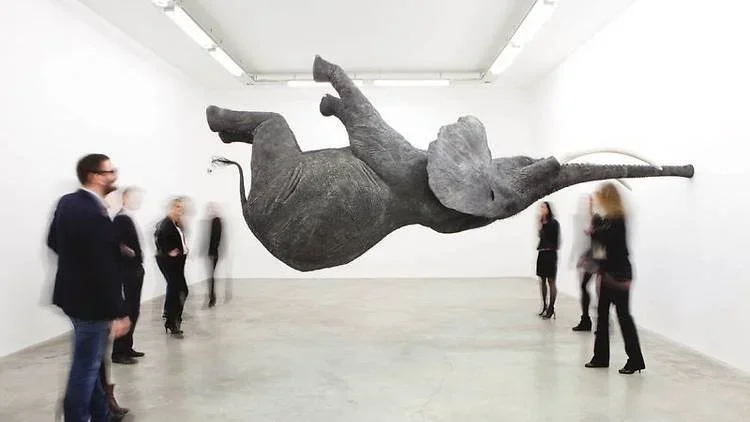
Daniel Firman, Nasutamanus (past exhibition at Perrotin)
This is the flagship location (among several global outposts) of Perrotin founded by Emmanuel Perrotin in 1990. Spanning over 1,600 square meters across three historic buildings, the gallery has played a pivotal role in the early careers of now-renowned artists such as Maurizio Cattelan, Takashi Murakami, Sophie Calle and Daniel Arsham. As far as Paris' resurgence as an art capital, Perrotin stands out as a homegrown Parisian institution that helped set the stage for the city’s renewed global prominence in the art world.
BONUS
Here are two additional exhibitions I would recommend you get to before they close:
Phílharmonie de Paris
L’Expo Disco: “I’m Coming Out” at the Jean Nouvel designed Phílharmonie de Paris (to August 17, 2025)
Centre Pompidou
Wolfgang Tillmans “Nothing could have prepared us – Everything could have prepared us” (to September 17, 2025). This show at the Pompidou had everyone buzzing - go if you can.
MAJOR THEMES
Being immersed in art allows me a certain lens, where I’m able to see general narratives developing not just in Paris, but in major art centers around the world. This is not like a trend, but rather a window into a collective consciousness that artists are creating about the world, and our understanding of it.
Ceramic is reinventing itself as a contemporary medium that is being celebrated as an art form in and of itself, but also as it is incorporated into paint and being applied directly onto the canvas, the frame, the floor.
Textile and beadwork feature heavily, in ambitious new works that are sometimes massive in scale.
Western art is no longer a thing as the art world has globalized and we now see everyone from small galleries to major museums across the world attempting to address the diaspora in their curation. I believe this is one of the contributing factors to the themes I’ve mentioned above.
Artists are increasingly focused on the environment, and a oftentimes dystopian view of the world is being exercised through their work.
Another recurrent theme I’m seeing are artists who are increasingly weaving spirituality into the narrative, and trying to make sense of what they are witness to in their time. This makes for a very personal and intimate connection and I’m seeing it done in beautiful ways.
You will also notice as you wander the gallery district, particularly in the Marais, a number of upscale vintage stores. Perhaps not surprisingly as this neighbourhood defines the future of consumerism and as more and more of the next generation are seeing ways to redefine fashion in a more sustainable way. After all, art is fashion and fashion is art, certainly in Paris.
This is the tip of the Eiffel Tower on the many exciting facets of Paris today. Thanks for being in my corner.
Emily
p.s. If you want these shows organized by location send me a note, I can text you my Paris 2025 google maps folder which handily shows their location based on where you are standing.
Mexico's hot palette
Mix together a photograph of a harem of semi-clad teenage girls reclining in a Vegas-style theme room, a performance piece of two sweaty fruit juice factory employees pedalling stationary bicycles, 3D paintings of riot police, and a cathedral filled with video art and you have Mexico City: A steaming megalopolis of 20 million people that is quickly becoming the destination hot spot for the global art glitterati.
As featured in The Globe and Mail.
No longer just a stopover en route to white sandy beaches and tacky tourist centres, the city is attracting a new breed of visitor: museum curators, art critics and art-loving travellers alike who are descending on this volcano-surrounded capital, buying art in La Roma, sipping Micheladas in the emerging neighbourhood of La Condesa and parking their Mercedes in upscale Polanco.
Fuelled by the popularity of films such as Frida, Y Tu Maman Tambien and the art collection in The Royal Tenenbaums, Mexico City is being touted as the new epicentre of cool; what New York was in the art market boom 80s or what London was in the 90s with the introduction of Charles Saatchi's Young British Artists.
In 2002, P.S.1 Contemporary Art Center in New York presented Mexico City: An Exhibition about the Exchange Rates of Bodies and Values that catapulted the emerging contemporary art scene in Mexico onto a global sphere. Some of the artists included in the exhibition were Gabriel Kuri, Yoshua Okon, Ruben Ortiz Torres, Daniela Rossell, Carlos Amorales and Minerva Cuevas.
All of these artists grew up in Mexico City and their work reflects this. It is a place of violent social contrast and diversity, where wealth and poverty, old and new, murder, corruption and politics have inspired some of the most stunning examples of contemporary art being produced in the city today.
One of the artists included in the New York exhibition was Miguel Calderon. He achieved cult status for his "low-brow" paintings of Mexican motorcycle gangs wearing wrestling masks in the film The Royal Tenenbaums. Crudely executed and deliberately aggressive, the paintings increase the visual narrative of the film and speak volumes about the mescaline-induced state of their owner, Eli Cash (played by Owen Wilson).
Calderon describes his work as a reflection of the reality that he lives in.
"There is incredible violence here, incredible nervous energy, and ultimately great tragedy. My art is just a part of it."
Having just returned from shooting a film in Tokyo, Calderon said he would get bored if he lived in Japan. "Here, you are living with people who live in different times. It's like living in a time machine. People are aggressive. Places are old. There is corruption. That's what I like about Mexico, if you want to do things you just do them."
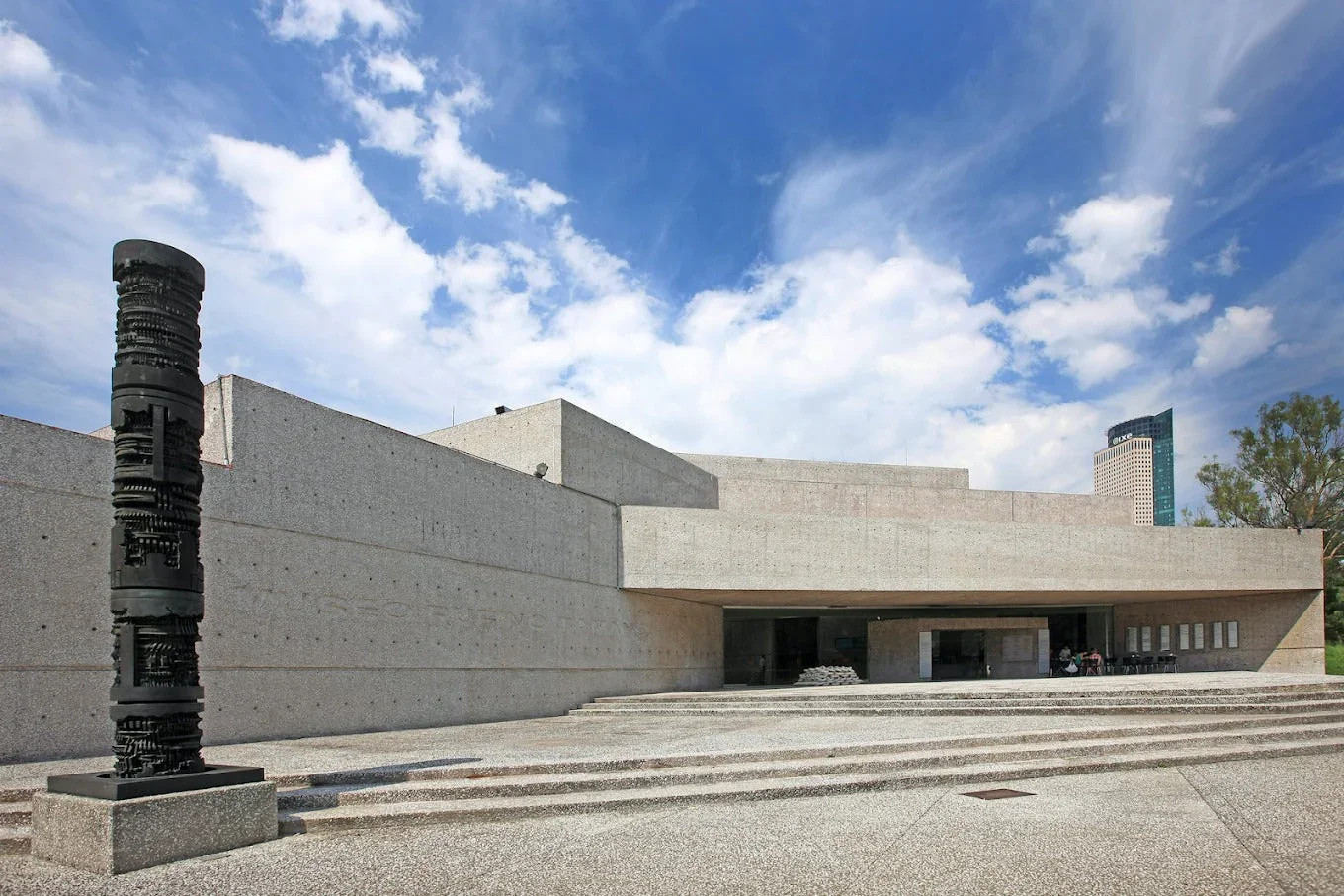
Far from the spring-break, tequila-chugging persona of resort towns such as Cancun and Cabo San Lucas, Mexico City offers a chance to reinterpret a country that is diverse and rich in cultural history. From the up-and-coming neighbourhood of La Condesa in the south to the sprawling Chapultepec Park in the west (home to two of the best modern art museums and the not-to-be-missed museum of anthropology), Mexico City is an audiovisual virtuoso in contradiction and extremes.
The Zocalo, the city's main square and historic centre, is a focal point of this contradiction, and a perfect place to begin a tour of the city. Built directly on top of the ancient city of Tenochtitlan, it was once a thriving Aztec capital made up of canals, bustling markets and floating gardens -- until Spanish explorer Cortez arrived in 1521 and razed it to the ground.
A symbol of this ill-fated defeat is the Cathedral Cortez, built on an unsteady lakebed, directly on top of a former temple of Aztec worship. The cathedral has been sinking slowly back into the ground for the last 500 years. With walls pulling in several different directions and an uneven floor, a tour of the interior creates the feeling of having imbibed a few too many cocktails consumed at high altitude. (The city, after all, sits at 2,200 metres above sea level.)
Just outside the front door of the cathedral lies the massive façade of the National Palace. This is where one can see how the violence, aggression and upheaval that Cortez brought to Mexico inspired artists such as Diego Rivera, and artists after him, to paint the murals that were featured in the film Frida. (Incidentally, some of the best examples of Frida Kahlo's work are not at her museum but at the Museo Dolores Olmeda on the outskirts of the city. It takes about an hour to get there, but it's well worth the trip.)
Directly outside the National Palace is the massive domed roof of the contemporary art institution Ex Teresa Arte Actual (XTAA). This former convent, built in 1684, was converted into a laboratory of experimental video, installation and performance art in the early 90s. The director, Guillermo Santamarina, is the Mexican version of Dirk Diggler from Boogie Nights: 70s cop glasses, a slightly cocky demeanour.
He is also a visionary curator who has rallied the support of international artists, curators and critics, including Canadian theorist Richard Martel, to create a forum for alternative expression that is clearly not afraid to take risks.
From March 28 to April 25, XTAA will feature an exhibition called The Cosmetic Chilanga, a documentary that uses emergency shelter installations, video files and photos from the city archives to show how the citizens of Mexico City appropriate and resist economic, social and political structures by integrating their own traditions with modern society. (Chilanga is slang for people living in Mexico City.)
Santamarina is also the guest curator for a new exhibition at La Coleccion Jumex, a multimillion-dollar art collection and exhibition space housed in a fruit juice factory in the suburbs of Mexico City. After passing through three levels of machine-gun-toting security and barbed wire fence, a gracious employee welcomed us with a selection of juices, being made in the building next door.
Launched in 2001 by Eugenio Lopez Alonso, a Mexico City playboy and 35-year-old heir to the billion-dollar Jumex fortune, the collection merges more than 600 works representing a who's who of international contemporary art into a massive 1,400-square-foot exhibition space. It's a virtual fun-factory for the likes of Santamarina.
The latest exhibition, called La Colmena, attempts to explore the science behind perfection in nature by using the hexagon as its starting point. For his part, Santamarina plans to install a working hive of bees onto the gallery floor in an ode to Buckminster Fuller and his theories of synergetic energy. When I visited the space, they were still trying to work around the strict "no insects" rule imposed on them by the city's health regulation officials.
Alonso has a reputation for purchasing "difficult" works of art. At the inaugural opening of the space two sweating factory employees in Jumex uniforms pedalled bikes that powered a single light bulb in a performance piece by Italian artist Maurizio Cattelan. The price tag? About $50,000 (U.S.). The bikes are now being stored on a rack hanging from the ceiling in the collection archives.
Alonso, however, is also a supporter of all things local, and has established an ambitious program of education, artists' grants and residencies to enhance the careers of Mexican artists locally and abroad. "Sponsored by Jumex" was a familiar tagline at pretty much every art venue across the city: Daniela Rossell, who was included in the exhibition at P.S.1, is among the A-list of artists whose work has been purchased by the Jumex Collection. As with Miguel Calderon, Rossell's work is being scooped up by galleries in London and New York. From 1994 to 2002, she produced a series of images that were published in a book called Ricas y Famosas (Rich and Famous), a Playboyesque case study of the city's prepubescent elite, where the super-rich pose in their vast, kitsch palaces, sneakered feet raised on gilded furniture or propped on the head of a stuffed lion.
Equally intriguing are the "camouflage" paintings by artist Manuel Cerda, recently exhibited at the Museo de Arte Moderno in Chapultepec Park. Entre ver y Aqui (Enter Here and See) is a colourful -- borderline decorative -- patchwork of lace painted on canvas. A pair of 3D glasses, however, reveals a more sinister side: a uniformed policeman in riot gear wielding a bat chases after a young bearded man who is trying to escape. The underlayer, visible only through the 3D lens, turns the "pretty" surface into an image that the artist describes as "a reflection of the present reality in Mexico City -- or elsewhere in the world."
The biannual International Festival of Sound Art is another example of the many events happening across the city. David Peralta, who works on special projects at XTAA, is one of the organizers of the festival. For three weeks starting this October, performers from across the globe will participate in workshops and collaborate on innovative sound projects. This includes Staalplaat, a group of artists from Amsterdam and Mexico, who will come together to create a live "electronic orchestra" by hooking a traditional salsa band into a console and mixing the sound with a fleet of 20 vacuums.
Peralta also owns an independent music label called Ultra Dub that supports the work of a new generation of musicians, such as Wakal and Nortec, who fuse traditional Mexican folk songs and hokey Tex-Mex from Tijuana with modern electronic beats. Along with drum and bass, dub, and techno-house, this new school fusion can be heard throughout the city at places such as Salon Tarara in the historic centre and Café Ina in La Condesa.
"The beauty of living in a city with 20 million people," says Peralta, "is that we have a built-in audience. The number of people who are into this scene is relatively huge. We don't have to wait until a big label recognizes us and releases a record. This just isn't possible everywhere else. The scene is growing. Independent labels are popping up everywhere."
Mexico City is in a constant state of flux. From the 1968 summer Olympics that spurred a boom in ritzy, Knot's Landing-isharchitecture to the modern day contemporary art exhibitions at the Museo Rufino and the chic Hotel Habita, one cannot deny that Mexico City is hip. Of course, any description of Mexico as hip is a somewhat loaded concept, considering that extreme poverty, corruption and art don't necessarily make the best bedfellows. Still, it's a place where violence and beauty coexist as parallel facets of everyday life. It is a pulsating diorama of colour, textures, sounds and smells that is making a major impact in the world of contemporary art and a lasting impression on travellers who choose to linger.
An art tour of Mexico City
Although Mexico City claims the largest urban population in the world, it is by no means inaccessible.
Many highlights are concentrated in neighbourhoods within the greater downtown core and can easily be reached by bus (which costs about 10 cents and sometimes includes live mariachi), subway or one of the many special tourist cabs available at all the hotels.
A few days is enough to give you a taste of what the city has to offer. Start with a tour of the museums in Chapultepec, followed by shopping and dining in La Condesa and continuing with a visit to the Laboratorio Arte Almeda on the west side of Almeda Park along rio Madero to the Zocalo.
Admission to most galleries is about $2; call for opening hours.
ART GALLERIE S AND MUSEUMS
Museo Tamayo Arte Contemporaneo: Paseo de la Reforma y Gandhi, Bosque de Chapultepec;
http://www.museotamayo.org; 52 (5) 5286-6519.
Museo de Arte Moderno: Paseo de la Reforma y Gandhi, Bosque de Chapultepec; 52 (5) 5553-6233; www.arts-history.mx/museos/mam/2menu.html.
Ex Teresa Arte Actual: Lic. Primo Verdad No. 8, Historical Centre; 52 (5) 5522-272.
O.M.R. Gallery: Plaza Rio de Janeiro 54, Colonia Roma; 52 (5) 5511-1179; mailomr@webtelmex.net.mx.
La Coleccion Jumex: Frugosa, SA de CB, Km. 19.5. Carretera Mexico-Pachuca Ectapec Edo; samuel@lacoleccionjumex.org; 52 (5) 5699-1961. Open to the public weekdays by appointment. The best way to get to this gallery in the suburbs is by hiring a taxi (about $50) for the half day trip as public transportation is difficult at best.
Museo Dolores Olmeda Patino: Av. Mexico 5843, La Noria, Xochimilco 16030; 52 (5) 5555-1221; www.arts-history.mx/museos/mdo/home2.html. There is a good map on the museum's website that will explain how to get there on the subway. The trip takes about an hour but the floating canals in Xochimilco are not far off, making this an excellent day trip.
WHERE TO STAY
No longer just a place to drop your bags and take off in search of adventure, Mexico City's hotels are becoming destinations within themselves.
Hotel Habita: Av. Presidente Masaryk 201, Colonia Polanco. Price range: $175 to $275 (U.S.); 52 (5) 5282-3100; http://www.hotelhabita.com. Located in upscale Polanco, Hotel Habita is Mexico City's answer to the Ian Schrager-inspired boutique hotel phenomenon. Boasting the rooftop bar AREA and the ground floor restaurant Aura, this is the place to rub shoulders with the uptown crowd and is within walking distance of the excellent artist-run Sala de Arte Publico Siquieros.
La Casona: Durango 280 Esq. Cozumel, Colonia Roma; price range: $95 to $120 (U.S.); 52 (5) 5286-3001; http://www.hotellacasona.com.mx. Located in the emerging neighbourhood of La Condesa, this turn of the century hotel features claw foot bathtubs, 14-foot high ceilings and all the conveniences of a modern hotel.
Hotel Maria Christina: Rio Lerma 31, Colonia Cuauhtemoc; price range: $60 to $100 (U.S.); 52 (5) 5703-1212. If you're looking to experience the more traditional side of Mexico, this hotel is easy on the pocket book and has a wonderful, tropical garden where you can sit and read the morning paper. The canned muzak, however, is a bit of a turnoff.
Camino Real: Mariano Escobedo 700, Colonia Anzures; price range: $200 to $780 (U.S.); 52 (5) 5227-7200; http://www.caminoreal.com/mexico. Although recent renovations distract this gem of 1970s modern architecture from its former brilliance, it's still a great place to stay or visit.